




Reality’s Last Stand is a reader-supported publication. Please consider becoming a paying subscriber or making a one-time or recurring donation to show your support.

About the Authors
Lee Jussim is a Distinguished Professor of Psychology at Rutgers University New Brunswick, a social psychologist, and was Criminal Justice Program Chair in 2008, Psychology Department Chair from 2010-2013 and 2018-2022, and Anthropology Acting Chair, 2023-2024. His work focuses political extremism; stereotypes, prejudice, and discrimination; and reform and improvement of psychology’s methods and practices. His most recent book is Virtuous Nonsense: Progressive America’s Epistemic Crisis.
Ohad Fedida is a Ph.D. student in Social Psychology at Rutgers University, working under the supervision of Dr. Lee Jussim. His research focuses on social contagion, extremism, and authoritarianism. His work has been published widely.
Colin Wright is an evolutionary biologist, Senior Fellow at The Manhattan Institute, and the CEO and Editor-in-Chief of Reality’s Last Stand. His work focuses on the science and public policy of sex and gender. His writing has appeared in The Wall Street Journal, the New York Post, Newsweek, City Journal, The Washington Examiner, and other leading news outlets and scientific journals.
Nearly identical versions of this post are appearing here and at Lee Jussim’s Unsafe Science.
Preface
This post is the first of what will be a multi-part response to critics of the HHS report “Where the Clinic Meets the Movement: Does Gender Ideology Arm Left-Wing Authoritarian Psychology?,” that was produced with researchers at the Network Contagion Research Institute (NCRI), Rutgers University, and The Manhattan Institute.
The report was very transparent and careful about its findings, which was the discovery of a strong positive association between the endorsement of major professional organizations’ gender-affirming recommendations and left-wing authoritarianism, as well as support for political violence.
In the wake of its publication, it has received both praise and criticism. In our view, only an exceedingly small minority of that criticism has been serious and offered in good faith, while the rest can only be described as absurd distortions of our work fueled by an activist moral panic.
In this series, we will respond to both the reasonable objections and the most unhinged misrepresentations. This first installment simply summarizes what we did and found. For now, we are leaving responses to the weird mix of political denunciations and actual epistemic criticisms to subsequent posts.
Summary Up Front
We were contacted by The Network Contagion Research Institute (NCRI) to collaborate on this research. We did. The full report can be found here.
We abstracted recommendations regarding transgender people and those experiencing gender dysphoria (wanting to be a different sex than the one they were born as) from the American Psychological Association, the American Academy of Pediatrics, the American Psychiatric Association, and the World Professional Association for Transgender Health, and turned them into agree/disagree questions. We referred to this as the Clinical Gender Affirmation Scale (CGAS).
We pre-registered predictions that the CGAS would correlate with leftwing authoritarianism (LWA) and with peoples’ expressed willingness to justify political violence. It did.
The critical response from many media outlets and individual academics has ranged from alarmist and absurd (the large majority) to genuine but wrong or misguided (the small minority).
Research Questions
How well does LWA correlate with CGAS?
Does LWA predict CGAS over and above ideology? Put differently, does ideology explain away any correlation between CGAS and LWA?
Do CGAS and LWA correlate with justifications for political violence?
Statement of Limitations
This report did not address:
Quality of clinical care for anyone, including transgender people or those expressing gender dysphoria.
Beliefs and attitudes held by transgender people or those with gender dysphoria.
Engaging in political violence.
Correlates of rightwing authoritarianism (RWA) or rightwing extremism. There is a massive literature that has focused exclusively on RWA without assessing LWA.
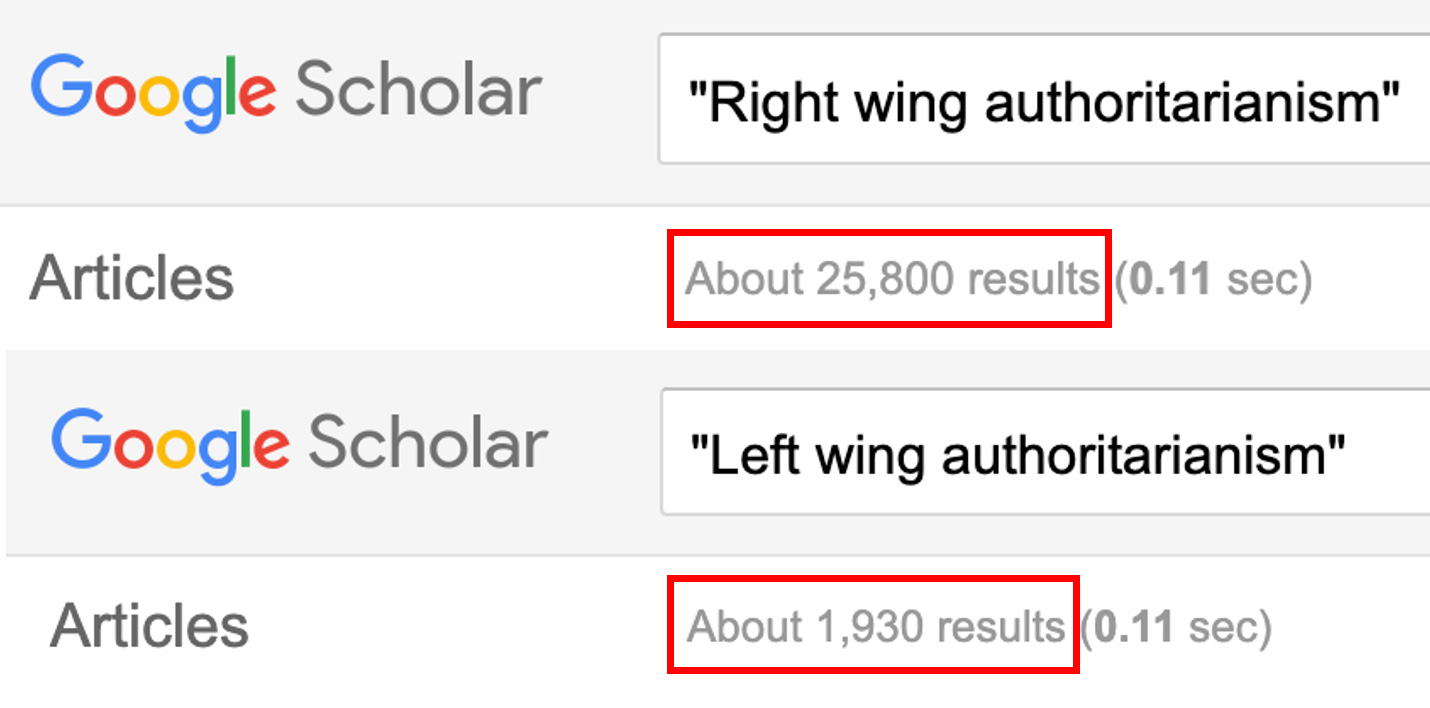
This report is a drop in the bucket in correcting that imbalance. Regardless, no one should conclude that this report finds the left more extreme or more supportive of violence than the right, because it was not assessed.
We created the CGAS to begin this line of research. It has never been used before.
We had a national sample of Americans. We did not have a sample of clinical professionals, transgender people, or those with gender dysphoria; as such our empirical findings are not an assessment of the beliefs and attitudes held by a sample of such people. The sample was obtained through Cloud Research, which is an opt in sample. Although our sample was matched on major U.S. demographics, it is not a fully representative sample.
The research is nonexperimental, meaning that strong causal interpretations are not justified, although nonzero correlations do justify speculations about possible causal mechanisms.
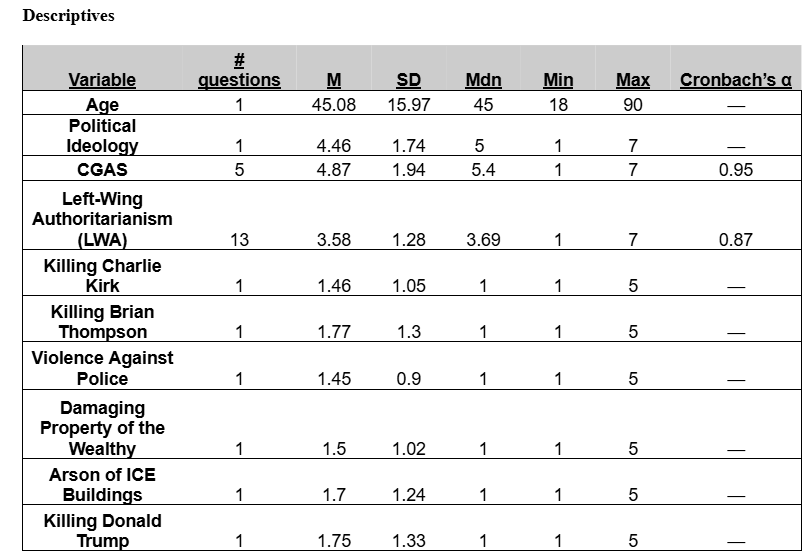
The online HHS version linked above did not report basic descriptive statistics for the variables in the report. We rectified that here.
Background
From the report:
Left-wing authoritarianism (LWA) is the construct at the center of this study. It describes a psychological profile characterized by aggression toward perceived oppressors, enthusiasm for top-down censorship and institutional enforcement, and hostility toward conventional social institutions—in short, an authoritarian disposition organized around left rather than right political content (Costello et al., 2022).
The study itself addressed whether endorsement of the official positions of clinical institutions regarding “gender affirmation” is associated with LWA. Because one of the components of LWA is aggression towards supposed oppressor groups, we also predicted that such endorsement would also correlate with support for political violence against rightwing targets.
The report repeatedly refers to “gender ideology.” This is a contested term. Many of the report’s detractors deny there is any such thing, and claim it is just a catch-all term for those on the right to dismiss, denigrate, or derogate trans people.
We disagree. Sociologist Callie Burt (2026) described Gender Identity Ideology as follows in the peer reviewed journal Theory and Society.1 Indeed, this appears in a section titled “Gender Orthodoxy” to capture the idea that these are a set of dogmatic beliefs, highly contested in both the academic literature and wider society. According to Burt, Gender Identity Ideology has three main components:
Sex-constructionism: Rather than being biologically defined and consisting of two types, male and female, sex is a social construction imposed on an underlying continuum of ‘sex traits.’
Gender-identity essentialism: All humans have an innate gender identity—as a deeply felt, internal sense of their own ‘gender,’ whether they are male/man or female/woman, which is independent of their sex.
Gender-identity precedence: Whether one is a man/boy or woman/girl (both or neither) is determined by gender identity, not sex.
We believe the report did a pretty good job of constructing a preliminary assessment of some of the beliefs related to this ideology. But read on, and decide for yourselves.
The Leftwing Authoritarianism (LWA) Scale
Measures of leftwing authoritarianism are psychological measures. They measure people’s beliefs and attitudes regarding whether conventional practices and norms and traditional values should be torn down. They also assess support for doing so in ways that violate the rights of supporters of those conventional practices, norms, and values, e.g., through censorship or political violence. Such measures do not address anything about whether any particular government or powerful actor or organization is authoritarian, though they do predict people’s likelihood of supporting powerful authoritarian actors in support of leftist political goals.
There are multiple measures of LWA out there, but (and in contrast to some of our critics who focused on supposed weaknesses of measures we did not use) we focus here on the one we actually used (Costello et al., 2022; Costello & Patrick, 2023). Contra some of the claims out there, the LWA scale we used is one of the most highly validated scales in social and political psychology. It is psychometrically sound, responses are approximately normally distributed across the set of response options, and it moderately to strongly correlates with dogmatism, political intolerance, support for violence against opposing partisans, social vigilantism (think, “Twitter mobs”), and banning “offensive” speakers (Costello et al., 2022). It also has been found to moderately to strongly correlate with antisemitism, antiZionism (Allington et al., 2023; Bertram & Krispenz, 2026; Conway et al, 2023; Zulberg et al, 2026), and a series of authoritarian policies for dealing with COVID (e.g., prohibiting “misinformation,” surveillance of churches, restricting the right to protest against govt actions, restricting rights to trial by jury and banning firearms sales – Manson, 2020). It also correlates with “critical social justice attitudes” (Selterman & Bernstein, 2026, this includes endorsing things like having fewer white authors on university reading lists). It also correlates with endorsement of blasting (denigrating) opponents and trying to intimidate them (Hart et al, 2024).
On top of the validity evidence, there is far more evidence for the measurement and psychometric soundness of the LWA scale (Costello et al., 2022; Costello & Patrick, 2023; Lambert et al., 2024) than for many other scales in common use in social and political psychology (Hussey & Hughes, 2020), including most measures of rightwing authoritarianism.
Clinical Gender Affirmation Scale (CGAS)
The Clinical Gender Affirmation Scale (CGAS) was developed to reflect the recommendations of major professional organizations’ recommendations for treatment of and interactions with transgender people and those experiencing gender dysphoria. The following table shows how we created questions about laypeople’s endorsement of those recommendations:
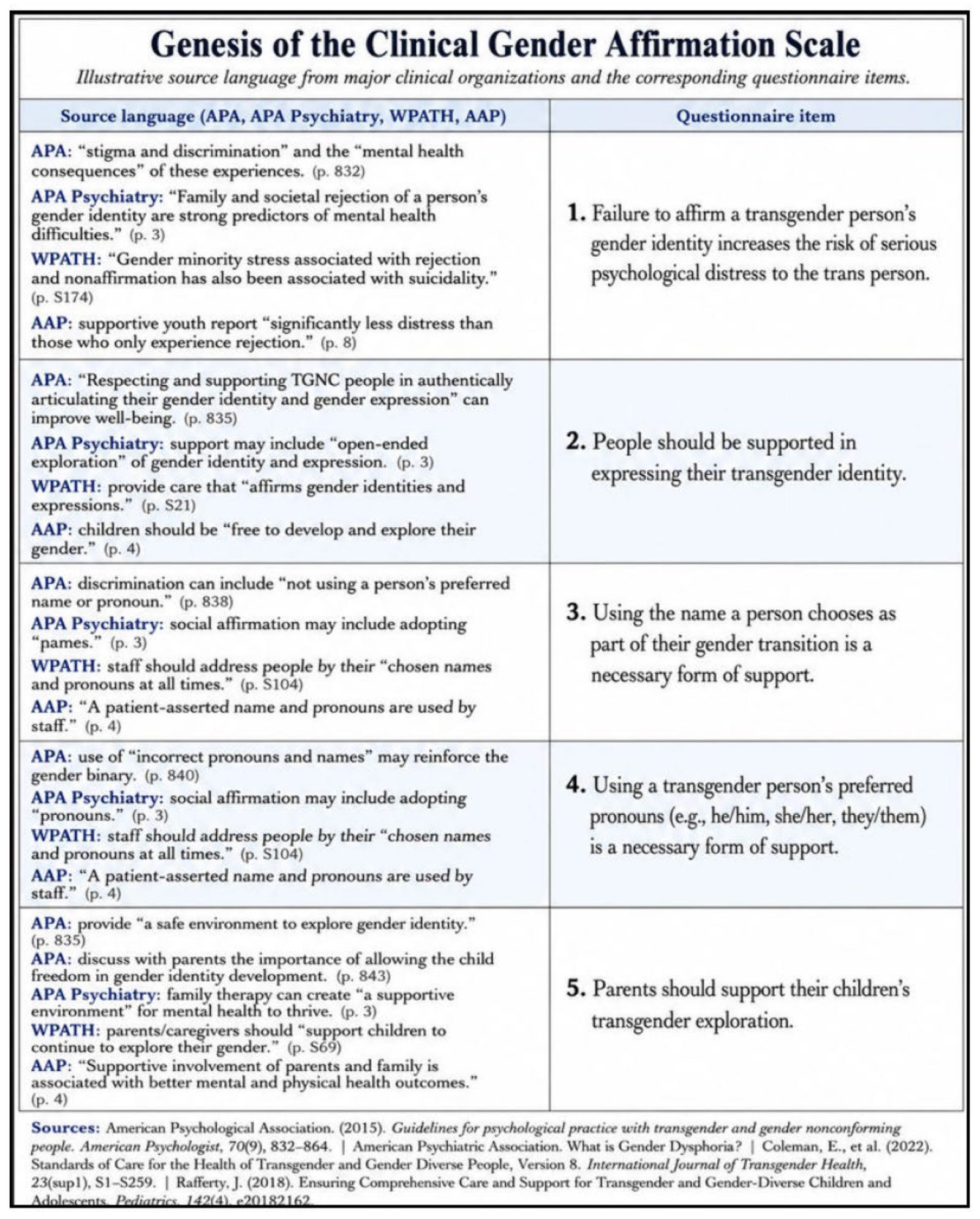
Table 1.
The left column presents quotes from the professional organizations. The right column presents how we abstracted their key recommendations to turn them into an assessment of how much people endorsed those recommendations. The five questions shown in the righthand column:
Were assessed on a 1 (strongly disagree) to 7 (strongly agree) scale (with each answer option labeled). That is, people were asked how strongly they agreed or disagreed with each statement.
Responses on the five questions were averaged.
The reliability of the CGAS was high, Cronbach’s alpha = .95.
Some Notes on the CGAS
Inasmuch as this is the first use of the CGAS, it has not been previously validated. However, as Costello (2023) correctly put it:
… early self-report measures of psychological variables are often informed by a priori theories, without which the development of indicators would be mostly arbitrary (e.g., without a preliminary theory of depression, it would be challenging to construct potential items for a depression scale). Critically, these early measures can then be used to modify the theories on which these are based (Westen & Rosenthal, 2003) … the development of theory and measurement of variables that cannot be directly observed often proceeds iteratively and mutually, with theory shaping measurement and measurement, in turn, shaping theory. This process is known as construct validation bootstrapping or “exploratory test construction”
Thus, results based on the CGAS should be considered preliminary. However, one form of validity is correlation with hypothesized variables it is supposed to be related to. The only way to assess that is to conduct the study. Which we did.
Another form of validity is construct validity. Do the questions measure what they are supposed to measure? Any reader can judge for themselves whether our questions did a good job of abstracting the ideas and claims made by the professional organizations shown in Table 1 above.
Justification for Political Violence
Four items assessed the justification of political violence: (1) setting fire to ICE buildings, (2) damaging the property of wealthy people, (3) killing Donald Trump, and (4) violence against police. The two theoretically focal killings, Charlie Kirk (killed by a putative trans activist) and Brian Thompson (the Luigi Mangione target), were assessed with the same scale. Items were preceded by brief factual descriptions of each event and rated on a 5-point scale:
1 - Not at all justified
2 - Slightly justified
3 - Somewhat justified
4 - Mostly justified
5 - Completely justified.
Internal consistency was good (α = .86).
Several points about this measure are worth mentioning:
Our measures assessed endorsed justification for violence, not actually engaging in violence.
Our methods and measures avoided known pitfalls in assessment of support for political violence. This article pointed out that many questionnaires produce higher apparent than actual levels of support for political violence because of known pitfalls. For example, some had vague questions. They highlighted this question from prior research as an example:
“How much do you feel it is justified for [respondent’s own party] to use violence in advancing their political goals these days?” But the estimand measured by this survey item is unclear because it leaves ambiguous what “violence” refers to.
In contrast to the measure criticized above, our measures did not ask about vague “violence.” They quite specifically asked about killing particular people or bombing particular types of buildings.
Another problem is what they referred to as “disengaged” (i.e., inattentive) respondents. Our methods stringently ensured all respondents included in all analyses passed not one, not two, but a slew of attention and quality checks.
There were two attention checks and three bot/AI agent checks that also doubled as attention checks. Two instructed respondents to pick one particular answer (e.g., choose “puce” as their favorite color). The three bot/AI agent checks also doubled as attention checks. The bot/AI agent checks we used were the most rigorous we found and were validated in pre-registered research that detected over 97% of bots while only miscategorizing about 4% of humans as bots (Affonso, 2026). Affonso found that the bot/AI agent checks achieved this when used as follows: exclude a respondent if they failed all three bot/AI agent checks. Therefore, any respondent who failed either of our two main attention checks or all three bot/AI agent checks were excluded. From the report:
We recruited 1,305 U.S. adults through CloudResearch Connect. Data collection began after preregistration on the Open Science Framework (OSF: n2cqj). 97 participants were excluded for failing one or more attention checks, failing all three bot-detection items, completing the survey in under six minutes, having duplicate IDs, or incomplete responses, yielding a final analytic sample of N = 1,208.
We are confident we removed at least most, and probably all, inattentive/disengaged participants. We respectfully submit that our methods were state-of-the-art with respect to identifying and removing inattentive and fake participants.
Findings
One of the very few criticisms of our report that we consider justified is that we did not report basic descriptive statistics for the variables assessed. We should have and we correct that here. Full descriptives for all variables included here are reported at the end of this post.
We now turn to the answers to our three research questions:
How well does CGAS correlate with LWA?
If nonzero, does LWA predict CGAS over and above ideology? Put differently, does the ideology explain away any correlation between CGAS and LWA?
Do CGAS and LWA correlate with justifications for political violence?
All correlations reported below are Spearman’s rho and all regression results are from ordinal regressions because most variables were ordinal and some were not normally distributed.
1. How well did the CGAS correlate with LWA?
LWA correlated .54 with CGAS. The average effect size in social psychology corresponds to a correlation of .22. Anything over .50 places in the top 5% of relationships found in social psychology.
Did LWA predict CGAS beyond mere ideology?
Measures of authoritarianism, both LWA and RWA, are purposely confounded with ideology. This is because one of the most common manifestations of authoritarianism is intolerance of the other side. This can be expressed as support for aggression against and censorship of the other side, along with other heavy-handed govt or authority measures that deprive people on the other side of basic rights (Manson, 2020). Because authoritarian attitudes and impulses disproportionately target the other side, questions are designed to target one side or the other. LWA questions target the right; RWA questions target the left.
This, however, raises a problem that we turned into an empirical question. The problem is that, when LWA (or RWA) correlates with something, one does not know whether this is because of the ideological component or authoritarianism per se (or both!) are driving the correlation. The empirical solution, however, is straightforward: Use both LWA and political ideology as simultaneous predictors of some outcome, as in regression or a structural equation model. If LWA predicts the outcome over and above ideology, one has evidence that it is the authoritarianism per se that is driving some portion of the correlation.
We found that both LWA (β=.33) and ideology (β=.51) predicted CGAS scores (both p’s<.001). In other words, over and above ideology, LWA did indeed predict CGAS scores. However, over and above LWA, ideology predicted CGAS scores, and this relationship was stronger than that for LWA.
2. Did CGAS and LWA predict support for political violence against rightwing/rich/powerful targets?
They clearly did:

Table 2. N = 1,192. Entries are fully standardized coefficients (β) with 95% confidence intervals from proportional-odds ordinal regressions; each violence item was regressed simultaneously on LWA and political identity (higher = more left-wing). LWA = left-wing authoritarianism; CGAS = Clinical Gender Affirmation Scale. *p < .05. **p < .01. ***p < .001.
LWA was a strong predictor of how much people justified violence targeting rightwing, rich, and powerful targets. The CGAS correlations were more modest, but still higher than most found in most social psychology research.
Did LWA predict support for this type of political violence over and above political ideology?
It did:
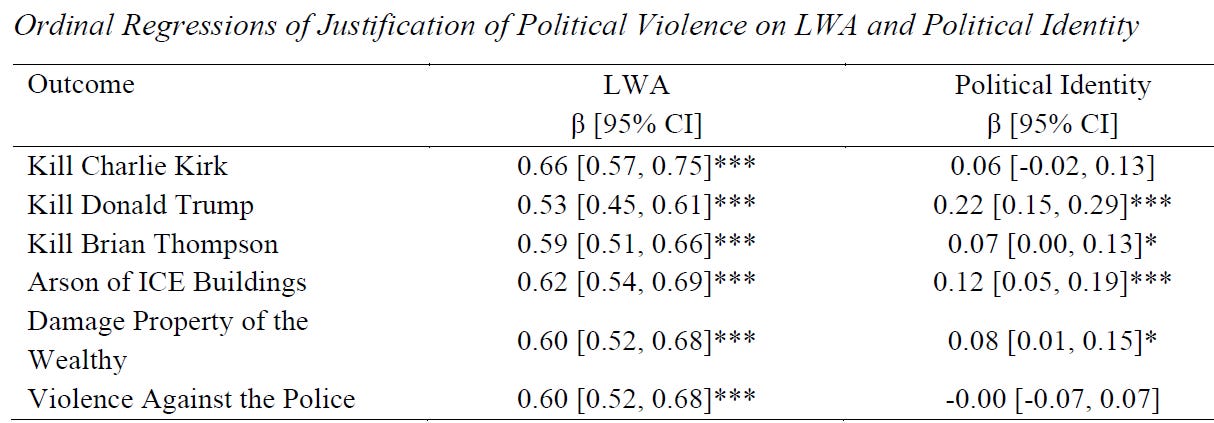
Table 3. N = 1,192. Entries are fully standardized coefficients (β) with 95% confidence intervals from proportional-odds ordinal regressions; each violence item was regressed simultaneously on CGAS and political identity (higher = more left-wing). LWA = left-wing authoritarianism; CGAS = Clinical Gender Affirmation Scale. *p < .05. **p < .01. ***p < .001.
But LWA? Those are some hefty coefficients. People high in LWA justified violence against these targets at substantially higher levels than did those low in LWA. To give a feel for these relationships, the next table compares justification for political violence among those on the low (3 or lower) vs. high (5 or higher) ends of the LWA scale for willingness to justify the murder of United Health Care CEO Brian Thompson.
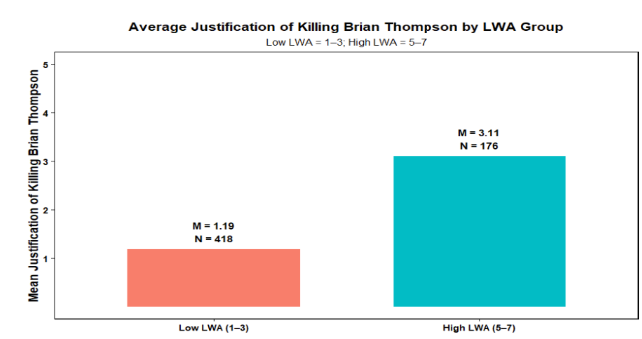
Nearly all 418 people low in LWA declared that the murder was completely unjustified (which is why the mean is just above 1, “not at all unjustified”). In contrast, the mean for the 176 people high in LWA is just above 3, “somewhat justified.” One of the major components of LWA is “anti-hierarchical aggression” (Costello et al., 2022). This result is consistent with their and others’ findings that LWA predicts support for repression, intimidation and political violence targeting the rich, those high in status, and those on the political right (Costello & Patrick, 2023; Hart et al., 2024; Manson, 2020; Zulberg et al., 2026).
This analysis is very interesting. The political identity coefficients hover barely above 0. This means that, even for these rightwing, rich, and powerful targets, liberals did not particularly strongly justify violence much more than did conservatives. This is good news, at least for those of us who think willingness to justify such violence is itself corrosive to a liberal democratic society.
We are still analyzing the data. We know from the Table 3 analysis that political identity mostly disappears when controlling for LWA, which was not done in this analysis. It seems likely that political identity would evaporate here too when we do conduct that analysis.
Similarly, we know from the very first analyses reported herein that CGAS had a pretty hefty correlation with LWA of .54. It’s possible, then, that, were we to control for LWA, the CGAS relationship with justification for political violence would be greatly reduced. Put differently, maybe endorsing these sorts of extreme transgender beliefs only predicts justification of political violence because those who endorse them tend to be high on LWA. Assessing the simultaneous relations of LWA, CGAS and political ideology/identity to our justification for political violence variables is on our to-do list.
Conclusions
The findings nicely replicate prior work finding LWA correlates with support for political violence (Costello et al, 2023). Furthermore, we raised the possibility that “transgender ideology” as operationalized here by endorsement of CGAS items arms LWA in three ways (from the report):2
First, it specifies perceived sources of harm: Republicans/political conservatives, individuals not identifying as LGBTQ, Christians/religious conservatives, and law enforcement appear in the literature as groups or institutions associated with negative attitudes toward individuals who identify as transgender, restrictive policy preferences, discrimination, or mistreatment of individuals who identify as transgender.
Second, it mandates institutional norm enforcement: non-affirmation is framed as
clinically harmful to patients, and clinicians are instructed to work with families and institutions to promote acceptance and “affirmation” … Within the proposed model, this provides authoritarian psychology with a mechanism for norm enforcement: dissent from “affirmation” can be construed not merely as disagreement, but as inducing physical harm, thereby making compelled affirming speech, institutional discipline, and intervention against parental resistance appear morally necessary and clinically protective.
Third, it reorders conventional sex and family norms. The clinical literature and
professional guidelines increasingly frame gender identity as not reducible to biological sex. They recommend “affirmation” of asserted names, pronouns, and “gender expression”; and emphasize that family, school, and clinical environments should support “affirmation,” with rejecting responses treated as risk factors for psychological distress and suicidality … Within the proposed model, this supplies LWA with a third form of ideological fuel: a conventional order to dismantle. As such, biological-sex classifications and traditional parental or familial authority are seen as structures of harm requiring a moralized project of institutional correction.
Each component is specific, actionable, and derives from clinically endorsed consensus positions. Thus, gender ideology identifies the type of oppressor and oppressed classes about which people high in LWA are particularly concerned; it seeks top-down censorship and control over those who do not conform to its dictates, something those high in LWA generally endorse when applied to “oppressors;” and third, it seeks to exercise that control in a project that aspires to overturn the status quo with respect to sex and family, and overturning the status quo is something those high in LWA generally endorse.
Epiprologue
What is an epiprologue? Well, it is simultaneously an epilogue to this post, and a prologue to posts to come. You will not be surprised to discover that some leftwing media had a total meltdown over this report, accusing us of all sorts of vile things.
Desperately Seeking an Ethics Violation
Several of the media reports pointed out, correctly, that the report did not state that it had IRB approval. One interpretation is that this is some sort of weird insinuation that it didn’t. Wouldn’t it be great (from the critics and denouncers standpoint) if the whole effort was one big ethics violation?
It did. Rutgers IRB approved the project in June, 2026.
Interestingly, the presumption seems to be “if it had IRB approval, it would have been reported.” But this is not the case. Reporting IRB approval is a mixed bag, even at peer reviewed journals. Some require it, others don’t. Offhand, it is easy to find plenty of peer reviewed publications that do not mention whether the research received IRB approval (e.g., Castanho Silva et al, 2020; Sevincer et al, 2023)
Similarly, we have been contacted by some reporters interested in unreported conflicts of interest (COIs, it is indeed a reasonable ethical standard for researchers to report financial conflicts of interest. None of us on this post received a dime from any source for this project; nor did Rutgers University or The Manhattan Institute. We have no COI.
Call us chastised. Denouncers are often sociopaths, making stuff up, or insinuating it (which protects against defamation suits to some degree), in order to delegitimize those they denounce. We will definitely report such information going forward.
Epistemic Criticisms and Garden Variety Denunciations
There was also a weird mix of false or irrelevant epistemic criticisms, and garden variety progressive denunciations. These criticisms will be fully addressed in upcoming posts. To give you a preview:
Epistemically false: We have been accused of using an invalid measure of LWA. This is absurd given the validity evidence described in the section above titled “The LWA Scale.” Of course those making this absurd claim have shown no sign that they are even aware of the evidence. Indeed, some of the criticisms of the LWA scale may reflect the misbegotten belief that we just invented it in ways that rigged the results of the study to confirm our hypotheses, rather than using a pre-existing, well-established, well-validated scale developed by other researchers and that has now been productively used in many prior studies.
Others, such as a long blog post that will be linked and quoted at length in a subsequent post, vehemently characterized our study as “invalid,” in part by spending hundreds of words supposedly debunking measures of rightwing authoritarianism and a different LWA scale than the one we used. Yes, criticizing scales we did not use really was (a big part of) the basis for declaring our study “invalid.”
Epistemically irrelevant: Our justification for political violence measures have been accused of being invalid because some people avoid extreme options on a scale. The idea is that our justification for violence scale overestimates how much people actually believe violence is justified; it’s just that they do not like using “1” the lowest point on the scale. We doubt it (because of the steps taken to prevent this, described above and because most people did, in fact, choose “1” especially if they were not high on LWA). Still, even in the unlikely event that this is true, it cannot possibly explain the correlations of it with CGAS and LWA.
Denounced again! And then there are the political denunciations. We are in bed with the Trump administration. There is no such thing as “gender ideology,” it’s just a term concocted by far-right transphobes. The report arms the far-right’s attacks on trans people. The conclusions were reached before we conducted the study.
There is more, much more, like this. We could argue that these sorts of denunciations reflect exactly the type of dynamic described in our report … and maybe we will.
RLS Readers: Save 50% on SEGM’s 2026 Conference
The Society for Evidence-Based Gender Medicine (SEGM) is bringing leading researchers, clinicians, patients, parents, and legal experts to Washington, DC, November 5–7, for its 2026 conference, “Rethinking Youth Gender Medicine: Charting a Path Forward.”
Over three days, speakers will examine what the evidence on youth gender medicine actually shows, where important uncertainties remain, and what ethical and responsible care should look like going forward.
SEGM has generously extended a special 50% discount to Reality’s Last Stand readers on both in-person and livestream tickets! Use promo code RLS-SAVE50% when registering.
This special rate may not last forever, so register soon if you plan to attend.

If you enjoyed this free article, please consider upgrading to a paid subscription or making a recurring or one-time donation below to show your support. Reality’s Last Stand is a reader-supported publication, and your help is greatly appreciated.


