



Reality’s Last Stand is a reader-supported publication. Please consider becoming a paying subscriber or making a one-time or recurring donation to show your support.

About the Author
James L. Nuzzo, PhD, is an exercise scientist and men’s health researcher. Dr. Nuzzo has published over 80 research articles in peer-reviewed journals. He writes regularly about exercise, men’s health, and academia at The Nuzzo Letter, with additional writings appearing at Reality’s Last Stand and Australians for Science & Freedom. In 2025, Dr. Nuzzo documented his academic cancellation using a freedom of information request. He is active on X @JamesLNuzzo.
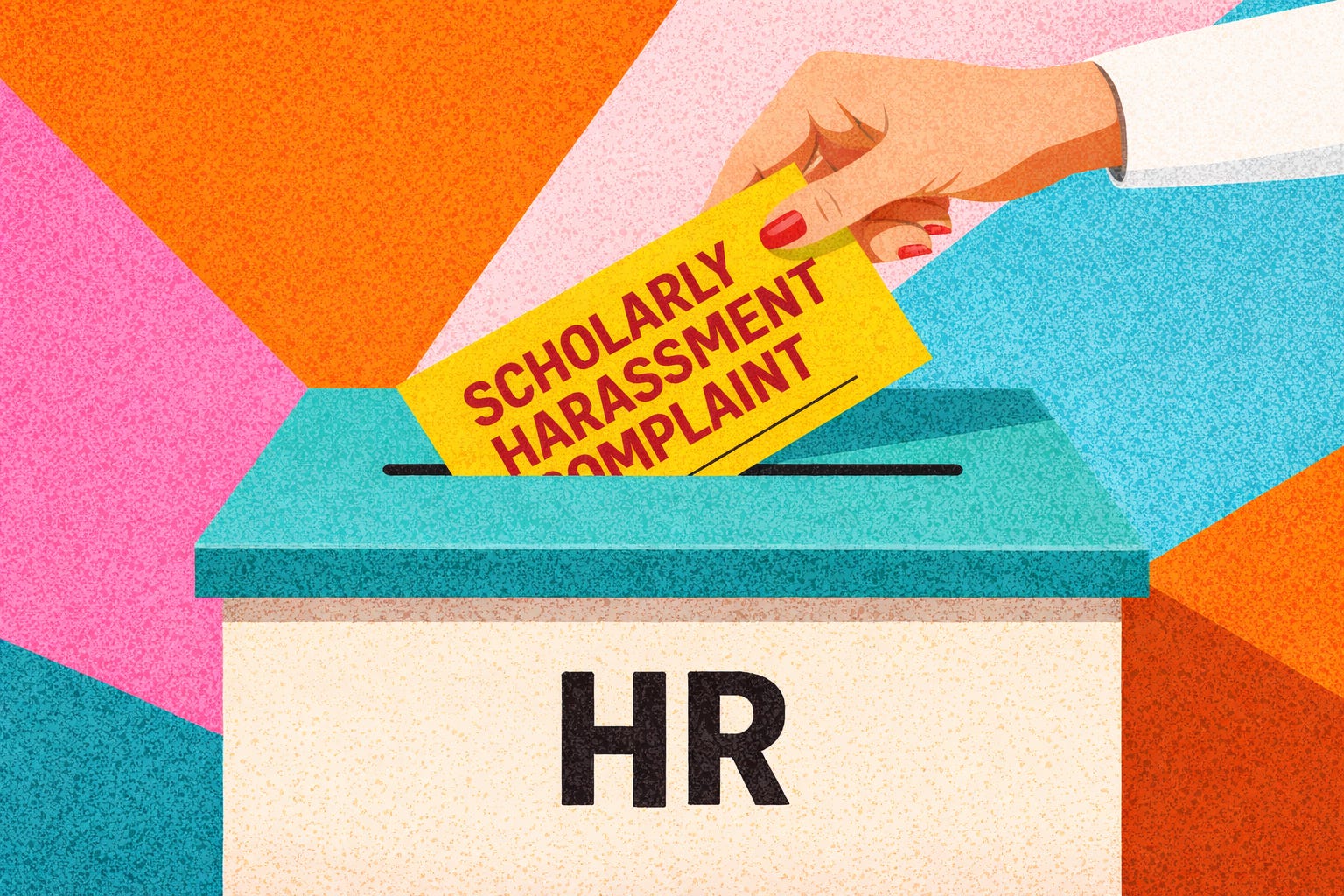
In 2023, June Gruber and four other female academics in the United States introduced a new concept into the academic lexicon: scholarly harassment. They defined it as “repeated mistreatment relating to one’s scholarly work, conduct or capabilities that is threatening, humiliating or intimidating,” and suggested that it applies almost exclusively to women (“female-identifying scholars”).
To my knowledge, this concept—despite its potential to reshape academic life— has attracted little critical commentary. Thus, to address this void in academic discourse, I outline several problems with the concept of scholarly harassment, including the predictable damage it would inflict on university scholarship if institutionalized.
What Constitutes “Scholarly Harassment”?
The most immediate problem with Gruber and colleagues’ scholarly harassment concept—beyond its built-in sex bias—is that it rests almost entirely on subjective emotional states: humiliation, intimidation, and threat. This renders it unworkable as a policy framework. The fact that a female academic feels humiliated by criticism of her work tells us nothing about whether the criticism is fair, accurate, or necessary.
Different scholars inevitably respond differently to critique. One woman may interpret a criticism as harassment; another may regard the same comment as standard scholarly disagreement. A concept so dependent on individual emotional reactions has no objective footing on which policy can stand.
The proposal is further undermined by its vagueness. While the authors provide examples of scholarly harassment, the list is so expansive that it raises more questions than it answers. These examples include:
“personality slander”
“side comments, hallway chatter and word-of-mouth rumours”
“unwarranted slights about the innovation” of her work
“accusations that [her] research and/or teaching is ‘unscientific,’ ‘lacking in rigour’, or ‘not objective’”
“unsubstantiated complaints or allegations of wrongdoing or scientific misconduct”
“discounting [her] ability to train students”
“judgments about physical appearance”
“intimidation to include co-authors on manuscripts”
“suggestions in public domains (for example, social media) that [her] work requires unusual scrutiny or should be retracted without formal investigate process”
women being “judged as unserious about their career or unprofessional” if they have a child before tenure or need to reschedule meeting to care for sick children
women being asked to “alter their behaviour…to align with gender expectations”
women being asked about “marital status during job interviews or potential childbearing plans”
Here, I will focus on one especially troubling claim: that calling a woman’s research “unscientific,” “non-objective,” or “lacking in rigor” constitutes scholarly harassment.
Critiquing the work of other academics is not incidental to scholarship—it is essential to it. I have written elsewhere, both in academic journals and on social media, about how letters to the editor in peer-reviewed journals have served as a primary vehicle for identifying errors, challenging weak methods, and correcting false claims in the published literature.
Academics have a professional responsibility to criticize work that is poorly reasoned, methodologically unsound, or untethered from objective reality. Such critiques must be permitted—without fear of sanction—in journals, at conferences, and yes, even on social media. Institutionalizing vague scholarly harassment policies would have a chilling effect on this process, suppressing legitimate criticism in the name of shielding emotions.
Self-censorship is already widespread on university campuses, and scholarly harassment policies would only make it worse. Because the boundaries of such harassment are undefined—and because no one can reliably predict how a given scholar will emotionally respond to criticism—male academics, in particular, will simply avoid critiquing female-led research altogether. The collective male silence would be disastrous. Without robust mechanisms for criticism and correction, entire disciplines risk drifting down intellectually hollow paths. And the few male scholars who defy this pressure and continue to challenge dubious work will likely find themselves canceled, professionally punished, or quietly ostracized for doing so.
How Will “Scholarly Harassment” Be Adjudicated?
Gruber and colleagues frame their primary aim as “rais[ing] awareness” of scholarly harassment. Even so, they also briefly discussed policy solutions. The result is unsatisfying and, in places, alarming.
First, they propose collecting both quantitative and qualitative data on scholarly harassment. In doing so, they double down on the sex bias embedded in the concept itself: white heterosexual men are explicitly excluded from the population whose experiences should be measured. The unavoidable implication here is that harassment is something only women experience and only men perpetrate.
They then suggest several institutional responses, including requiring external committees to assess complaints and enforcing policies that prohibit the use of personal information in hiring and promotion decisions.
From there, they turn to what they call the responsibilities of the “broader scientific community” for dealing with scholarly harassment, though many of their recommendations plainly fall within the purview of universities, not the broader academic community. These include calls to:
“increase accountability for those who criticize or discredit women’s scientific reputations”
enact “policies that protect and restore the reputations of affected women in ways that do not re-traumatize them or leave them feeling isolated”
“sanction those who lodge complaints [against female academics] based on malice or that are ultimately not substantiated”
“build solidarity among women and their male and non-binary allies through education (for example, formal colloquia, workshops and outreach communication to build awareness around the frequency, severity and varieties of scholarly harassment) and action (for example, infrastructure to report scholarly harassment, policies to protect women, and sustained and resilient networks to support, elevate and retain women who have been affected by scholarly harassment)”
And that’s where the discussion ends.
What is striking is how little effort Gruber and colleagues make to anticipate the most basic questions any serious policy proposal must confront. Consider a common scenario in modern academic life: a male scholar at one university publicly criticizes the work of a female scholar employed at another institution on social media. Which university’s “external committee” adjudicates the complaint? And what if a male academic merely “likes” or reposts someone else’s critique of a woman’s research? Does that constitute scholarly harassment?
The unanswered questions multiply quickly.
What happens if a male academic criticizes a paper with five female co-authors, each employed at a different institution? Does he face five separate allegations of scholarly harassment, or just one? If his critique appears in a peer-reviewed article or a letter to the editor, what then? Surely a male scholar must be free to argue, in print, that a published paper is methodologically weak or scientifically unsound. And where do journal editors and peer reviewers fit into this framework? Are they to be treated as accomplices in harassment for permitting such critiques to appear in print?
Consider academic conferences. What if a male scholar asks a female presenter a challenging (or “intimidating”) question during the Q&A? I once witnessed a female PhD student break down in tears during her dissertation defense after a senior male professor asked a non-confrontational question about her statistical methods that she could not adequately explain. Surely, she must have felt humiliated. But the professor was doing exactly what he was supposed to do: probing the work to assess its rigor. Under a scholarly harassment regime, would such an exchange now trigger a formal complaint?
Then there is the matter of due process. Once an accusation of scholarly harassment is lodged, what happens to the accused? Is he summoned before a tribunal? Does he have the right to know who accused him and precisely what he is alleged to have done wrong? Is he given an opportunity to defend himself?
And if he is found “guilty,” what penalties follow? A public apology? Mandatory sensitivity training? Removal from university committees? A prohibition on supervising female students? Suspension or administrative leave? Revocation of professional memberships or certifications? Termination of employment? Gruber and colleagues offer no hints.
Finally, there is the question no such proposal ever seems eager to confront: false accusations. If a female academic knowingly makes a false claim of scholarly harassment—an act that is itself a serious form of professional misconduct—will she face consequences equal to or greater than those that would have been imposed on the falsely accused? Or will the system, once again, recognize harm in only one direction?
Why “Scholarly Harassment” Now?
The emergence of “scholarly harassment” is best understood as a power play within the academy. One of its unstated but central functions is to insulate certain kinds of scholarship from legitimate criticism, specifically research produced by female academics that would otherwise face serious methodological or evidentiary scrutiny.
In many humanities and adjacent fields, female academics are more likely than their male counterparts to rely on qualitative methods and to frame their work through critical or feminist “lenses.” When combined with a stronger orientation toward explicitly “social justice”–driven scholarship, these approaches often embed ideological commitments directly into the research itself. The result is work that lacks rigor and objectivity.
As the female-to-male faculty ratio has shifted across universities, so too has the character of the scholarly output. Papers invoking social justice, “woke,” and critical theory terminology have proliferated at the expense of methodological clarity and empirical discipline. In this context, the concept of scholarly harassment functions as a way to reclassify substantive criticism as harm.
To see how such policies could be used to protect academic careers, consider contemporary scenarios.
Recall Claudine Gay, the former president of Harvard University, who faced allegations of plagiarism. Scholarly harassment policies would likely to protect Gay and other alleged plagiarists from criticisms of their academic integrity. Male academics who identify plagiarism—or any other serious scholarly wrongdoing—would have strong incentives to remain silent, fearing retaliation under vague harassment standards.
Or consider Deborah Cohen, M.D., who in 2019 published an extraordinary essay in the New England Journal of Medicine in which she publicly castigated herself for being a racist before turning the whip on her white colleagues. Her article was a case study in performative moralism (i.e., “virtue signaling”). Normally, a piece like that would invite blunt criticism. But under scholarly harassment policies, male academics will either stay silent or publicly agree that Cohen’s actions were honorable and heroic.
Now take the academic journal Fat Studies, which routinely publishes papers in which female and “non-binary” academics celebrate their own bodies as important, beautiful, lovable, and pleasurable. Whatever one thinks of such expressions, they bear a closer resemblance to personal reflection than to scholarship. Yet scholarly harassment policies would likely hinder male academics from pointing out that such writings are more appropriate for personal diary entries than for academic articles written at taxpayer expense.
The same dynamic applies closer to home. At my former institution, feminist “scholars” openly described themselves in a peer-reviewed journal as “academic misfits.” Their work, as I have documented elsewhere, was frequently illogical and openly bigoted toward heterosexual white men. Scholarly harassment policies would likely prevent male academics from defending themselves against such rhetoric or from criticizing scholars who openly admit that they are not fit for the profession they occupy.
Finally, consider a more systematic example. In 2025, Colin Wright compiled a list of what he judged to be the 24 worst peer-reviewed papers published in recent years. My secondary analysis revealed that 20 of those papers—83 percent—had first authors whose pronouns were something other than exclusively he/him. Is it scholarly harassment for me to observe that a disproportionate share of the most irrational and troubling academic papers of the year were written by “female-identifying scholars”?
The Feminized University
Concerns about the feminization of universities and of other major institutions are finally being expressed explicitly. Cory Clark and Bo Winegard’s 2022 Quillette article cracked the door open. Helen Andrews’ 2025 essay kicked it wide open.
Increasingly, people are connecting the dots between the rising female-to-male ratio on campus and a cluster of familiar academic pathologies: cancel culture, excessive safetyism, grade inflation, and the dominance of social justice activism. Clark has summarized much of the relevant empirical evidence in her recent paper, and the concept of scholarly harassment fits neatly within her broader framework. In particular, Gruber and colleagues’ framing reflects a distinctly female-typical prioritization of harm avoidance in academic environments.
Clark also presents evidence that academic cancellation functions as a form of social ostracism, and that such ostracism is more likely to be endorsed by women than by men. This directly undermines Gruber and colleagues’ implicit assumption that social exclusion and ostracism are primarily tools used by male academics against female colleagues. If anything, the available evidence suggests the opposite dynamic is often at play.
Notably absent from Gruber and colleagues’ analysis is any engagement with well-established sex differences in psychology and how those differences manifest institutionally. Instead, their focus is narrow and transparently self-serving: protecting and advancing women’s academic careers. They repeatedly emphasize the need for policies to ensure that scholarly harassment does not “derail a woman’s progress,” “paralyse her self-confidence,” “lead to the dismantling of her career,” or impose “psychological health costs.”
Men’s careers apparently do not merit similar concern. Nor do the authors consider how these dynamics may look from the perspective of a public that’s growing increasingly skeptical of universities themselves. Pew polling shows declining trust in scientists and a rising belief that higher education is headed in the wrong direction and is no longer important or worth the cost.
The possibility that these attitudes are linked to the feminization of universities—and to the accompanying expansion of bureaucracy, moral policing, and administrative enforcement—does not appear to have crossed the authors’ minds. Yet it is precisely this broader institutional context that makes proposals like scholarly harassment so consequential and so dangerous to ignore.
Conclusion
As women gain institutional power within academia, we are beginning to see how that power is being wielded. Rules are being rewritten in ways that serve their interests at the expense of the university’s traditional mission of truth-seeking and open inquiry. Because some women have gained university positions through preferential treatment (i.e., affirmative action) rather than merit, low-quality scholarship, particularly in the humanities, is proliferating. Much of this work is now subject to public criticism, particularly on social media. Gruber and colleagues’ sex-biased concept of “scholarly harassment” is, in part, an attempt to blunt that criticism and protect the professional standing of those who produce it.
There is an irony here. The article proposing scholarly harassment exemplifies precisely the kind of ideologically driven, methodologically thin work that critics have increasingly called out. Readers are justified in bristling at its portrayal of women as uniquely fragile and in need of special institutional protection, while simultaneously embarking on an emboldened quest for female institutional power and micromanaged bureaucratic control over everyday academic affairs. The predictable result of this combination is self-censorship, cancellations, and intellectual stagnation.
None of this requires a new harassment bureaucracy. The easiest way to avoid all this is not to establish a scholarly harassment bureaucracy but to recommit to objective reality, methodological rigor, and open disagreement by ditching critical and feminist frameworks that treat criticism itself as a form of harm.
By Gruber and colleagues’ definition, much of what I have written here would likely qualify as scholarly harassment. Yet they will be hard pressed to find an “external committee” to which they can submit a complaint. I hold no university affiliation, having already been pushed out by the very people and dynamics I describe. If men continue to be ostracized, disvalued, and deterred from participation in academic life, many will simply leave en masse to innovate and educate elsewhere.
What these men leave behind will still call itself a university, but it will function as a female community centre.
Thank you for supporting Reality’s Last Stand! If you enjoyed this article and know someone else you think might enjoy it, please consider gifting a paid subscription below.
If you enjoyed this article, you may also like…


This proposal is crazy.
"Academics have a professional responsibility to criticize work that is poorly reasoned, methodologically unsound, or untethered from objective reality."
Exactly.
There has also been a move towards not considering objective reality as a priority or of value.
I am not sure it is the women dominating or the fact that different standards are being applied to those who are women, as you point out. I was under the impression that the sample Clark had was not representative.
At any rate this makes no sense. If a result is true, it doesn't matter who found it. Ditto if it's not.
If this woman was taken seriously we are in worse trouble than I imagined.
And as a woman who values the unfettered search for truth I am embarrassed to my core by weak whiners like June Gruber.
We must do better.