

The NHS Puberty Blocker Experiment Is Science Theater
How the NHS PATHWAYS trial postpones accountability instead of uncovering the truth about puberty blockers.


Reality’s Last Stand is a reader-supported publication. Please consider becoming a paying subscriber or making a one-time or recurring donation to show your support.

About the Author
Andy Lewis is a skeptical blogger and critic of pseudoscience. He founded and runs the Quackometer website, where he exposes quackery and superstitious beliefs about health and medicine. Follow him on X @lecanardnoir
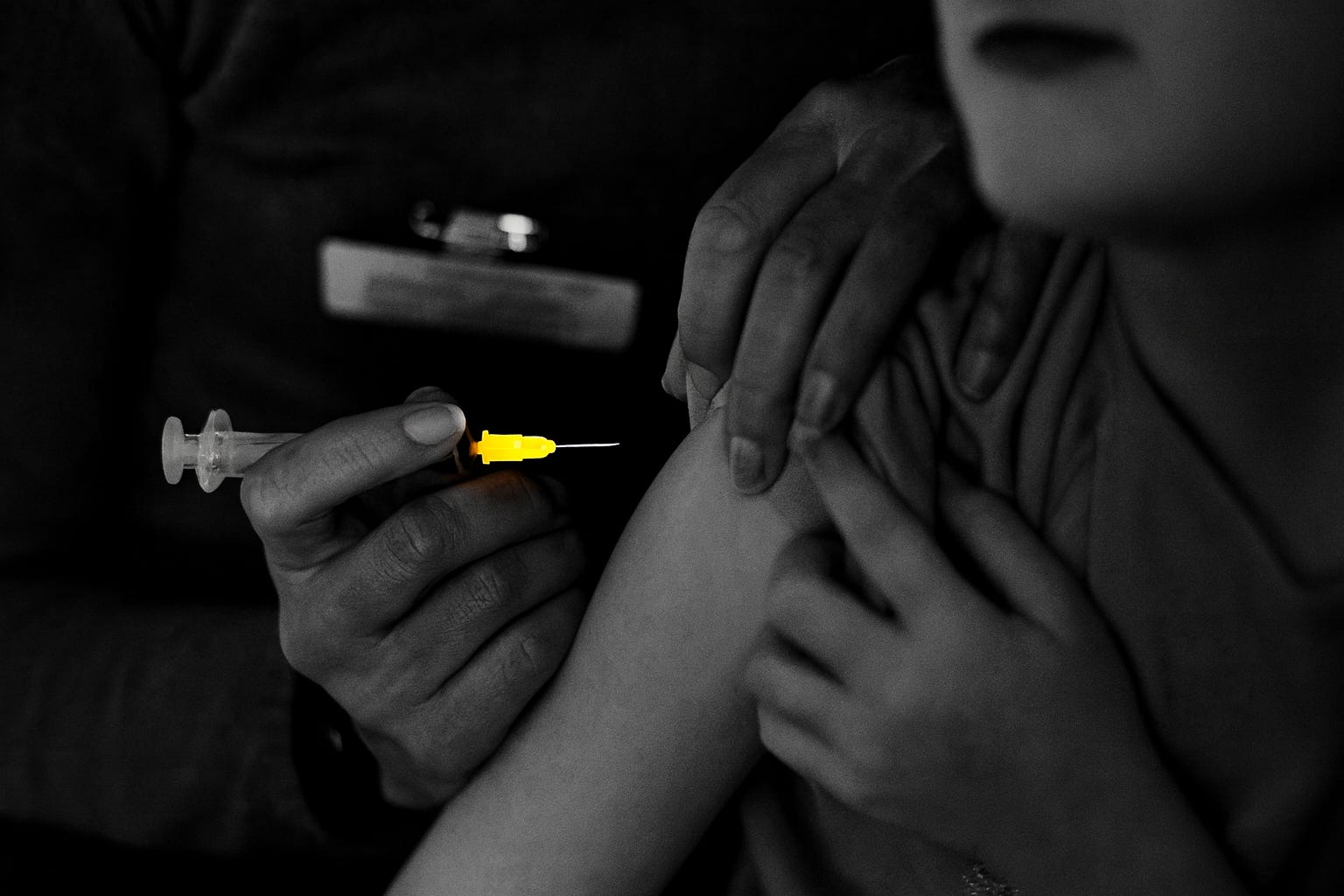
November 2025, and the NHS has finally launched the PATHWAYS trial. Two hundred and twenty-six children, most only just into puberty, will be randomized: half get triptorelin to switch puberty off today, half are told to wait a year while their young bodies do what maturing bodies do. Everyone receives the new psychosocial package. Everyone receives the puberty blockers eventually. Two years of questionnaires, bone scans, and optional brain MRIs later, we are promised definitive answers about puberty blockers. The Great and the Good of the Science Media Centre dutifully declared the trial “robust” and “essential.”
Forgive me if I remain unimpressed.
I said in February that this trial risked harming more than it helped, and I asked in the previous July what an ethical trial would even look like. Nothing I have seen since has shifted that view. In fact, the more one digs, the clearer it becomes that PATHWAYS is less a scientific endeavor than an expensive piece of theater designed to keep puberty blockers on the table while performing a pantomime of clinical trials.
Start with the Tavistock scandal that now appears to be forgotten. We already have outcomes for at least 9,000 children referred to the Tavistock GIDS clinic and several hundred who actually received blockers. That data sits in NHS desk drawers. Cass repeatedly asked for adult clinic data linkage between child and adult service so detransition and long-term health could be tracked. The clinics refused, citing spurious answers like “data-protection concerns” that have never withstood scrutiny. PATHWAYS is therefore £10.7 million spent to partially re-create some of that data we already possess but have deliberately chosen not to examine. We are putting more children at risk to avoid confronting activist therapists. The evidence that does exist is in papers that were systematically reviewed and found to be so flawed, under-powered, and selectively reported that the Cass Review found no high quality results.
Next, the diagnosis itself. Ethical trials require a clear intent to answer a scientific and clinical question that can inform future treatment decisions. It is hard to see what that question is. The trial is formally to test a treatment for “gender incongruence.” But this is not a clinical diagnosis. Activists insist this means the child is “trans,” that they possess an internal gender essence incompatible with their body, and that the only “remedy” is to alter the body to somehow match this ineffable feeling. There is no scientific evidence that such an intrinsic thing called a “gender” exists. This is postmodernist claptrap: the reification of abstract ideas about the sexes in society.
Gender is a social concept built on sex stereotypes: boys must be tough and sporty, girls must be pretty and gentle, and both must be heterosexual. Many (if not most) adolescents feel they fall short of these stereotypes; some feel it acutely. Puberty sharpens the discomfort. In the overwhelming majority the discomfort resolves without any intervention as puberty progresses. To pathologize this entirely normal process, label it a medical condition, and treat it with powerful endocrine disruptors is not progressive healthcare; it is regressive, cruel, and inherently unscientific.
The trial’s design guarantees we will learn almost nothing useful about puberty blockers themselves. Every single child (treatment arm and delayed arm) receives the same new package of psychosocial support: therapy, family work, psycho-education, regular clinic visits, the full comforting apparatus of being “in the system.” The only variable that changes is whether a child receives triptorelin injections now or in twelve months’ time.
That single difference in treatment timing is the sole thread we have to pull on if we want to isolate the specific effect of the drug. Yet the thread is buried under a dozen powerful confounders: the therapeutic alliance, the placebo effect of finally being believed, the nocebo effect in the delayed group who feel cruelly denied, the natural maturation that happens to every teenager over two years, regression to the mean, and the simple passage of time away from whatever acute crisis brought them to clinic in the first place.
Because the psychosocial support is constant and the drug is the only thing that moves, any observed change in mood, self-harm, or quality-of-life scores can be attributed to the counseling just as plausibly as to the hormone suppression. The trial has no mechanism for disentangling the two. It is rather like testing a new analgesic by giving every patient in the study the drugs and a daily massage and then wondering if the massage or the pills reduce the pain. The protocol may produce reams of numbers, but it is structurally incapable of telling us what the blockers actually do.
Any improvement in quality-of-life scores can therefore be attributed to the counseling, to placebo effects, to regression to the mean, or simply to the relief of finally being taken seriously. We will never know which. The delayed arm, meanwhile, starts the study believing they have been denied life-saving treatment. Nocebo effects and off-protocol self-sourcing of blockers are inevitable. The trial cannot separate these confounders any more than a non-blinded homeopathy trial can separate the effects of sugar pills from the therapist’s reassuring smile. Puberty blockers are a dramatic intervention that is bound to create a psychological response in those who wish them to improve their lives. A chiropractor’s crack is also dramatic, but drama is not the same as effectiveness and prudence.
The follow-up in the trial is just two years. Yet, the major questions are about what happens to children as they mature into young adults and further. Peak bone mass is not reached until the late twenties. Fertility outcomes, late cognitive effects, and long-term cancer risks will remain unknown. The promise of “registry linkage pending further funding” is not a plan; it is an admission that the most important clinical questions have been postponed indefinitely.
This is the same weary playbook Stanislaw Burzynski has been running since the 1980s: an implausible treatment (in his case, peptides extracted from urine) surrounded by fervent belief, wrapped forever in the protective cloak of “ongoing clinical trials” so that no definitive negative result ever has to be published, no license ever granted, and the patients keep paying millions while the clock runs on. PATHWAYS is simply the NHS’s £10.7 million, state-sanctioned version of the same quack trick.
Picture a 12-year-old girl who starts blockers under PATHWAYS this winter. By the time she is 30 she may never know what an orgasm feels like and will certainly never carry a pregnancy. That is not a rare side-effect from what we know already; it is the intended physiological outcome of the treatment this 12-year-old is being invited to “consent” to.
A majority of the children in such clinics arrive with autism, histories of trauma, depression, or eating disorders. Almost all cannot yet imagine adult sexual relationships or parenthood. To ask them to consent to a pathway that carries a substantial risk of permanent infertility and anorgasmia is to ask them to consent to something they cannot meaningfully understand. The consent forms may be legally watertight; they are ethically threadbare.
So what sort of results can we expect? Allow me to take a punt. The children who receive blockers immediately will, on the whole, report being “happy.” The children forced to wait a year for the treatment they have been told is life-saving will, on the whole, report being “sad.” The headline conclusion will be that puberty blockers must be offered as early as possible because they improve wellbeing. The two-year follow-up is conveniently too short for the serious skeletal, sexual, and fertility harms to become undeniable, so the treatment will be declared “safe and well-tolerated.” Critics who point out the blindingly obvious methodological flaws will be dismissed as bigoted, hateful, or “anti-trans.” This trial could not have been better designed if the brief had been: “Produce the most quack-friendly trial methodology possible while retaining a veneer of scientific respectability.”
If PATHWAYS had been submitted to the Cass Review as one more observational study it would have been graded low quality and filed under “inconclusive.” Instead it has been granted the status of the definitive trial, the one that will finally settle the matter. It will do no such thing. At best it will generate numbers that can be spun either way. At worst it will provide a veneer of scientific respectability for continuing to offer puberty suppression to children on the basis of ideology rather than science and evidence.
Ten million pounds and two hundred childhoods spent not to discover whether puberty blockers “work,” but to postpone the moment when the NHS finally has to admit they never did and never could.
I remain, as ever, watching.
This article was originally published in The Quackometer on November 25, 2025.

If you enjoyed this free article, please consider upgrading to a paid subscription or making a recurring or one-time donation below to show your support. Reality’s Last Stand is a reader-supported publication, and your help is greatly appreciated.
If you enjoyed this article, you may also like…


 | A guest post by
|
This "experiment" has already been done, in real lives. It is unforgiveable and unfathomable that the patients already treated cannot be found, interviewed, and their responses recorded. These new "patients" are nothing but two-legged guinea pigs.
When I first heard about the study I thought I must be reading it wrong. The only difference between the two groups was a year’s delay of onset of treatment? How does that NOT get completely lost in all the confounding factors? Sheesh.