



Reality’s Last Stand is a reader-supported publication. Please consider becoming a paying subscriber or making a one-time or recurring donation to show your support.

About the Author
Dr. Greg Brown is a professor of Exercise Science at the University of Nebraska at Kearney. His research focuses on the effects of nutritional supplements, physiological responses to exercise, and sex differences in sports performance. He has over 60 peer-reviewed publications and is an active member of several professional organizations, including the American College of Sports Medicine and the National Strength and Conditioning Association. He enjoys running, hunting, fishing, and spending time with his family. He and his wife, Amber, have two sons, one daughter in law, and a grandson.
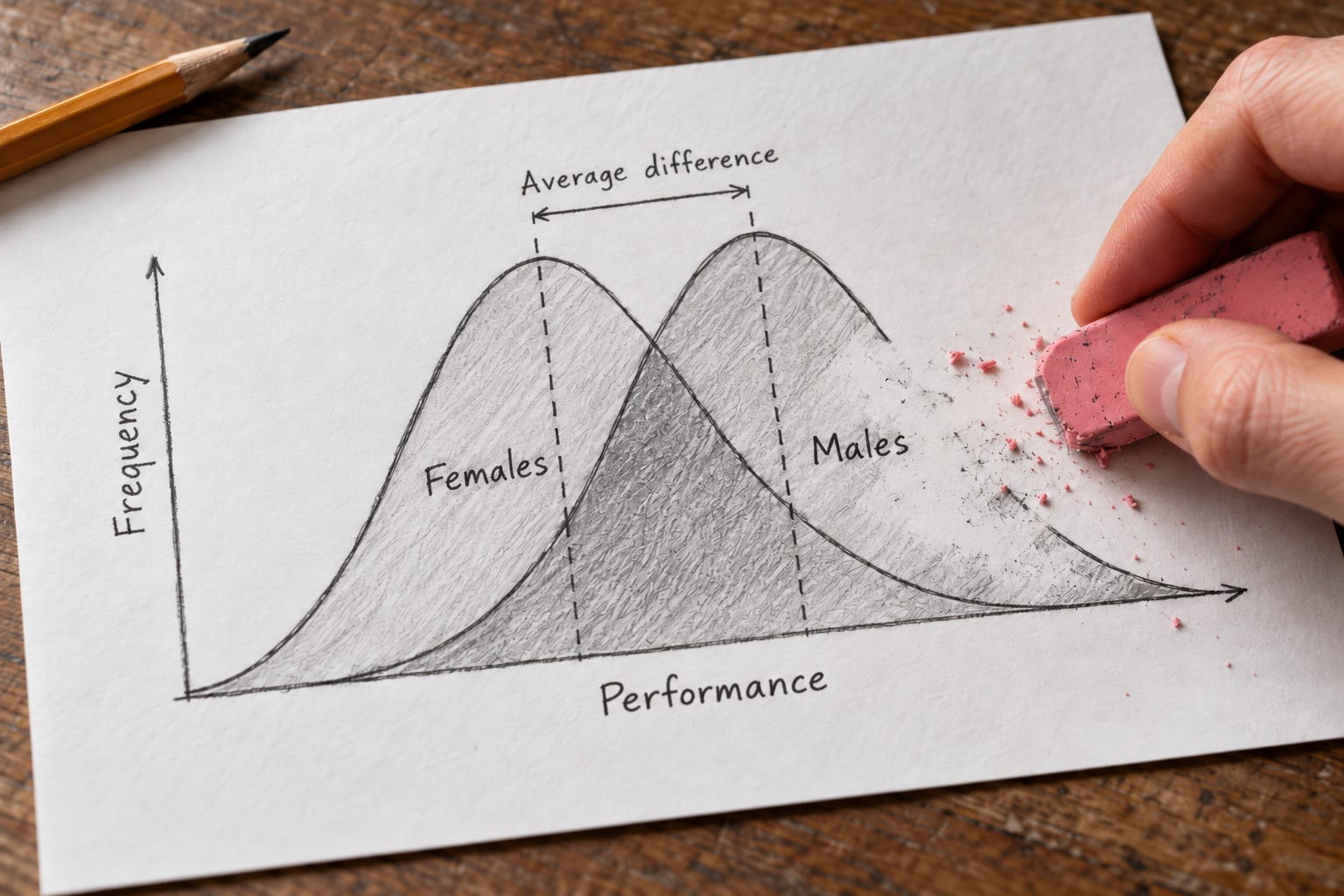
What does the “W” in WNBA mean? That seemingly simple question has recently become surprisingly contentious as the league confronts questions about whether males who identify as women (i.e. “transwomen”) should be eligible to compete in professional women’s basketball. The controversy is only the latest chapter in a much broader debate over whether male athletic advantages can be sufficiently reduced, or even erased, through testosterone suppression to allow transwomen to safely and fairly compete in female sports.
At the center of that debate is a scientific question that is often treated as though it has a simple answer: What kind of evidence would actually demonstrate that male athletic advantage has been erased? A few studies have reported that selected measures of physical fitness in testosterone-suppressed transwomen are no longer statistically different from those of females. But how much can we reasonably conclude from those findings?
When the Individual Doesn’t Follow the Pattern
A simple example from my own classroom helps illustrate the problem. Every semester, I teach an upper-level undergraduate course in exercise physiology, the scientific study of how the human body responds and adapts to physical activity and exercise. One of the concepts students learn is how the nervous system controls muscle force.
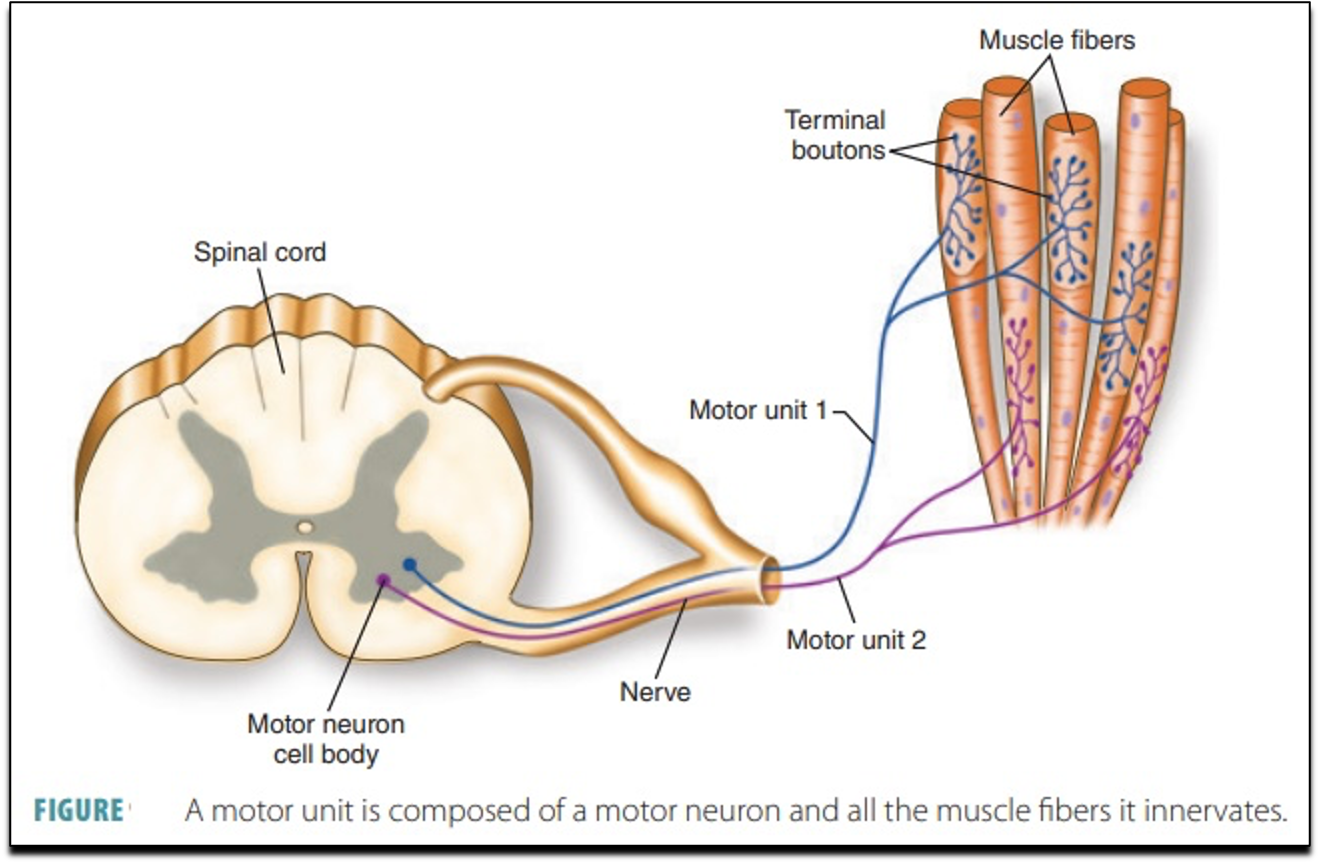
A motor unit consists of a single motor nerve and all of the muscle cells it controls. Generally, as the nervous system activates more motor units, the muscle produces more force, allowing us to lift heavier weights. By placing electrodes on the skin over a muscle, we can measure the electrical activity that occurs when the nervous system activates the muscle using a process called electromyography, or EMG. Greater EMG activity generally indicates greater activation of the muscle by the nervous system (30).
In the lab activity used to illustrate this concept, EMG activity is measured in each student as they perform three repetitions of a biceps curl at three different weights. The students enter their results into a spreadsheet, and we calculate the average EMG amplitude for the three repetitions at each weight. We then analyze the class data to determine whether EMG amplitude increases as the weight being lifted also increases. Semester after semester, it does. Having now analyzed data from nearly 1,000 students, the pattern is remarkably consistent: as the weight gets heavier, EMG amplitude increases significantly, illustrating the nervous system’s role in regulating muscle force.
Importantly, however, this conclusion is based on the class as a whole, not on what happened in any single student. That reflects an important principle in biological science: group-level patterns do not require every individual within a group to behave exactly the same way.
For instance, this semester there are 27 students in the class. As usual, when the class is analyzed as a whole, EMG amplitude increased significantly from the light weight to the medium weight and again from the medium weight to the heavy weight. But things get more interesting when we look at the students individually. For every student, the average EMG amplitude increased from the light to the medium weight. Yet for six of the 27 students, average EMG amplitude actually decreased from the medium to the heavy weight.
Does this mean that the nervous systems of these six students somehow operate differently—that they require less nervous activity to produce more muscle force? Of course not. Looking more closely at their individual trials helps explain the seemingly contradictory result. Each of these students had one unusually high EMG measurement during the three repetitions at the medium weight. Perhaps the student performed that repetition differently, such as moving the weight faster than during the other repetitions. Maybe they unconsciously anticipated that the weight would be heavier than it actually was. Or there may be some other plausible explanation for the single uncharacteristically high EMG amplitude. Whatever the reason, that one unusually high value raised the average for the medium weight enough to make it appear that EMG activity subsequently declined at the heavier weight.
Most importantly, these six individual results do not overturn what we observe in the other students, across nearly 1,000 students over many semesters, or in the established physiological literature. The overall relationship remains clear: as the amount of force required increases, so does neural activation of muscles. The exceptions are real observations, but they do not negate the broader physiological pattern.
The Biological Pattern We Already Know
Another key concept in exercise physiology is that sex is an extremely important biological factor influencing athletic performance. An enormous body of scientific research documents differences between males and females in strength, speed, power, and endurance, particularly following puberty, with the differences in upper-body strength being especially large (for example, see, 5,18,19,22). There is also extensive scientific literature documenting the anatomical and physiological differences between males and females that contribute to these differences in physical performance (for example see 11,14,15,27,32). Indeed, sex-based differences in athletic performance and their underlying biological causes are among the most consistently documented phenomena in exercise science (25).
Importantly, there is no single anatomical or physiological characteristic that explains the entire male athletic advantage. Nor should we expect there to be. Sex affects many characteristics simultaneously, including body size and proportions, skeletal structure, muscle mass and strength, hemoglobin concentration, heart and lung size and function, and numerous other factors that all contribute to physical performance. Athletic performance is the integrated result of all of these characteristics working together.
When “No Difference” Becomes “No Advantage”
It is against this extensive scientific background that we should consider a recent meta-analysis examining whether testosterone suppression eliminates differences in physical fitness between transwomen and females (26)[1]. A meta-analysis combines the results of multiple studies in an attempt to estimate an overall effect. One common way of displaying those results is a “forest plot,” in which each study is represented by a point showing the size and direction of the difference between the groups.
One particular forest plot in this paper caught my attention because the individual studies did not all tell the same story. Consider the analysis of upper-body strength (Plot A, below).
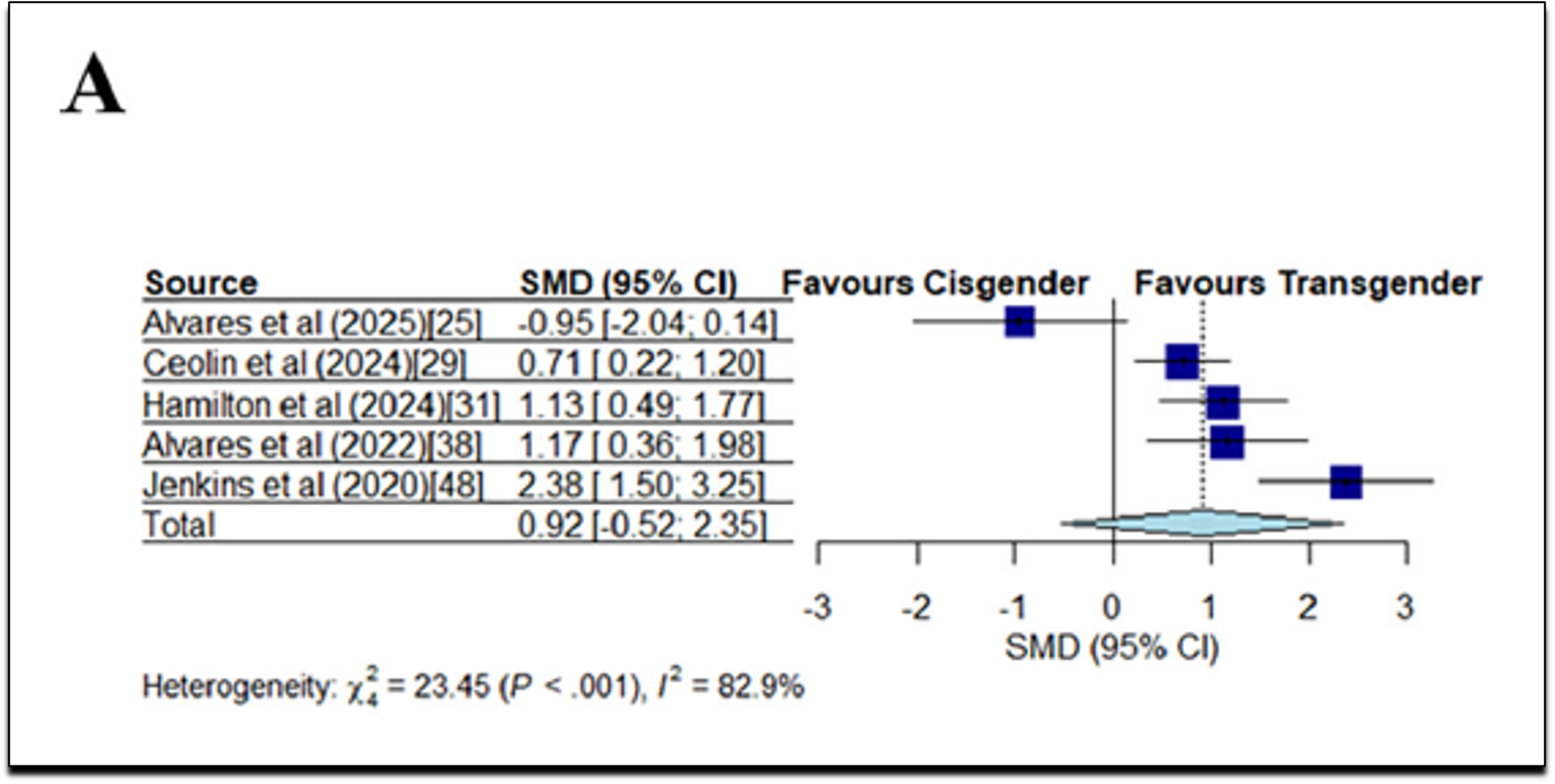
Four of the five individual studies showed greater strength in the transwomen than in the female comparison group, while one study showed the opposite. Yet when the studies were statistically pooled, the authors reported no statistically significant difference in upper-body strength between transwomen and females.
That statement may be statistically correct, but it can easily convey something the underlying evidence does not establish. “No statistically significant difference” does not mean that the two groups have been shown to be equivalent. Demonstrating equivalence requires answering a different statistical question: whether any remaining difference is sufficiently small to fall within a predefined range considered practically unimportant. Simply failing to detect a statistically significant difference does not establish that.
Moreover, when four of five studies point toward greater upper-body strength in transwomen while one points in the opposite direction, that inconsistency warrants closer examination. Why did one study produce a result so different from the others? How much influence did it have on the pooled estimate? Were there meaningful differences in the populations, duration of hormonal treatment, measurement techniques, or study design that might explain the discrepancy? These are precisely the kinds of questions that should be explored when interpreting a heterogeneous body of evidence. Rather than demonstrating that testosterone suppression erases the well-established male advantage in upper-body strength, these results leave considerable uncertainty about what can reasonably be concluded.
This is precisely why looking beneath a pooled statistical result matters, particularly when making a broad claim that a well-established sex difference in strength has been erased. Just as one unusually high EMG measurement can influence the average of three repetitions in my undergraduate lab, an individual study that differs substantially from the others can influence the result of a meta-analysis. That does not mean the unusual study should simply be discarded or the pooled statistical analysis ignored. It means we should ask why the studies produced such different results, how much influence each study had on the pooled estimate, and whether the combined evidence is strong enough to support the conclusion being drawn from it.
This also illustrates the danger of using a small amount of evidence to support a much larger conclusion. Imagine that instead of 27 students in my lab, there were only five, and one of those five showed the unusual EMG pattern described above. That single student could have a substantial effect on the statistical analysis due to the small overall number of students. A clear pattern that has been shown in a larger dataset might become statistically uncertain, or even fail to reach statistical significance, simply because the dataset was too small to reliably distinguish the broader pattern from individual variability.
This does not mean that studies reporting female-range values in transwomen should be dismissed because they are fewer in number. Quite the opposite: those findings are part of the evidence and should be taken seriously. But they must be interpreted within the much larger body of evidence establishing the numerous sex-based characteristics that contribute to physical performance. Demonstrating that some of those characteristics have moved toward, or even reached, female values does not by itself establish that the integrated athletic advantage produced by all of them has disappeared.
Looking Beneath the Meta-Analysis
This is not intended to be a comprehensive review of every study examining hormonal intervention and physical performance in transwomen. Instead, I will look more closely at several studies that illustrate the difficulty of moving from a finding that a particular characteristic has changed to the much broader conclusion that male athletic advantage has been erased.
So, let’s look a little more closely at the 2025 study by Alvares and colleagues (1) which appears to carry considerable weight in the Mendes Sieczkowska meta-analysis. The study compared just seven transwomen volleyball players with eight female volleyball players and reported no statistically significant differences between the groups in handgrip strength, countermovement jump height, squat jump height, or VO2max.
But look more closely at whom the researchers were comparing. On average, the transwomen were approximately five years older, weighed 8 kg less, and were 5 cm shorter than the females. This is noteworthy because adult males are, on average, substantially taller and heavier than adult females, typically by roughly 10–15 cm in height and more than 10 kg in body mass, and these differences are not eliminated by a transgender identity with or without hormonal intervention in adulthood (19,20,22,28). Yet in this study, the usual difference was actually reversed: the transwomen were both shorter and lighter than the female comparison group[2].
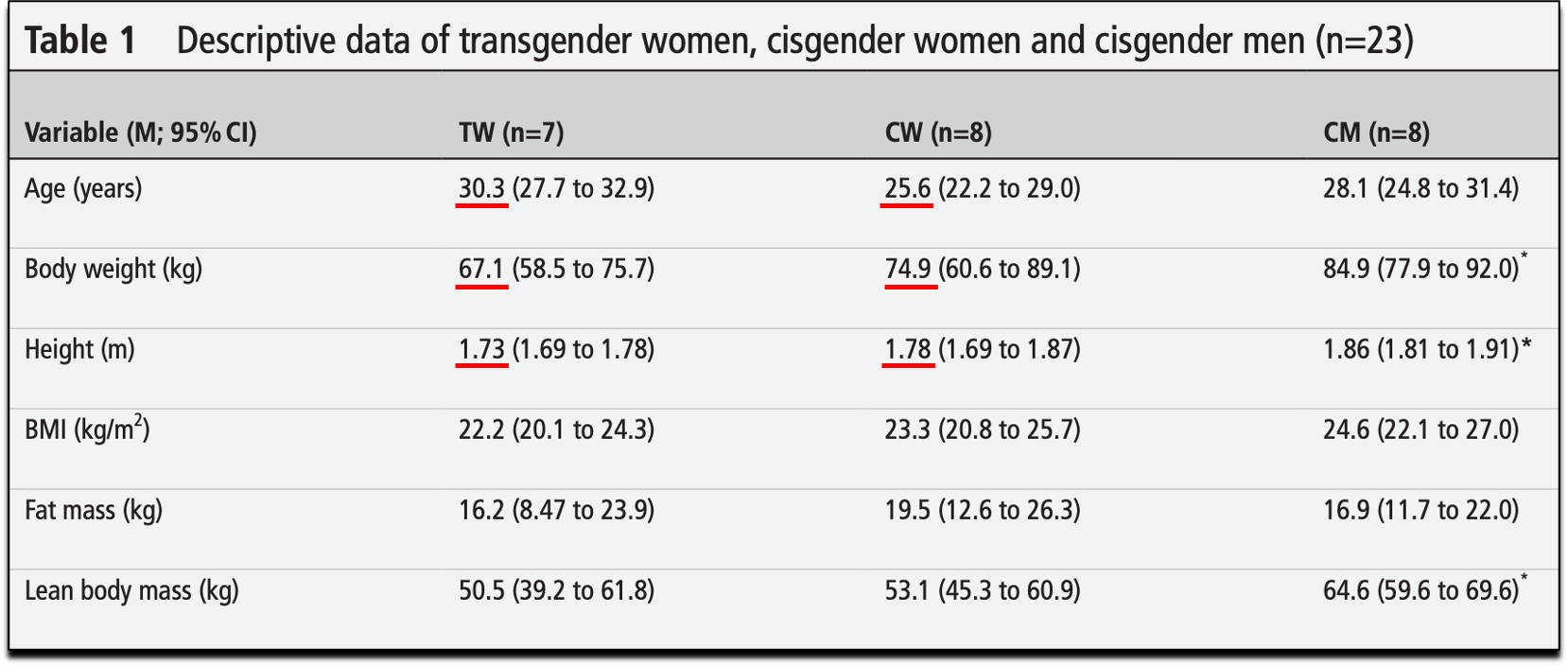
Perhaps even more importantly, the transwomen participated in volleyball training for approximately four hours per week, while the females trained approximately 14 hours per week. The differences in training time make the finding of similar physical fitness particularly difficult to interpret as evidence that hormonal intervention erased male athletic advantages. These were not otherwise comparable groups differing primarily in sex and hormonal treatment. The transwomen were older, smaller, lighter, and trained far less, yet still produced similar results on several laboratory measures of physical fitness. At a minimum, those findings are consistent with the possibility that retained male advantages allowed a substantially less-trained group of transwomen to perform similarly to the much more highly trained females. The study design cannot tell us what the results would have been had the groups been comparable in age, body size, and training.
This is precisely the problem with allowing a single study, or a single point in a forest plot, to carry too much interpretive weight. “No statistically significant difference” describes the statistical comparison that was performed. It does not tell us why the groups produced similar values, nor does it demonstrate that hormonal intervention caused an underlying male advantage to disappear.
Now let’s look at another study by Alvares and colleagues (2) in which the researchers compared 14 females with 15 transwomen who had undergone hormonal interventions for approximately 14 years. Despite the long duration of treatment, the transwomen remained taller and heavier and had greater lean body mass, absolute handgrip strength, and absolute aerobic capacity. However, when handgrip strength and aerobic capacity were divided by lean body mass, the results looked quite different: the difference in aerobic capacity disappeared, while handgrip strength relative to lean body mass was actually greater in the females.
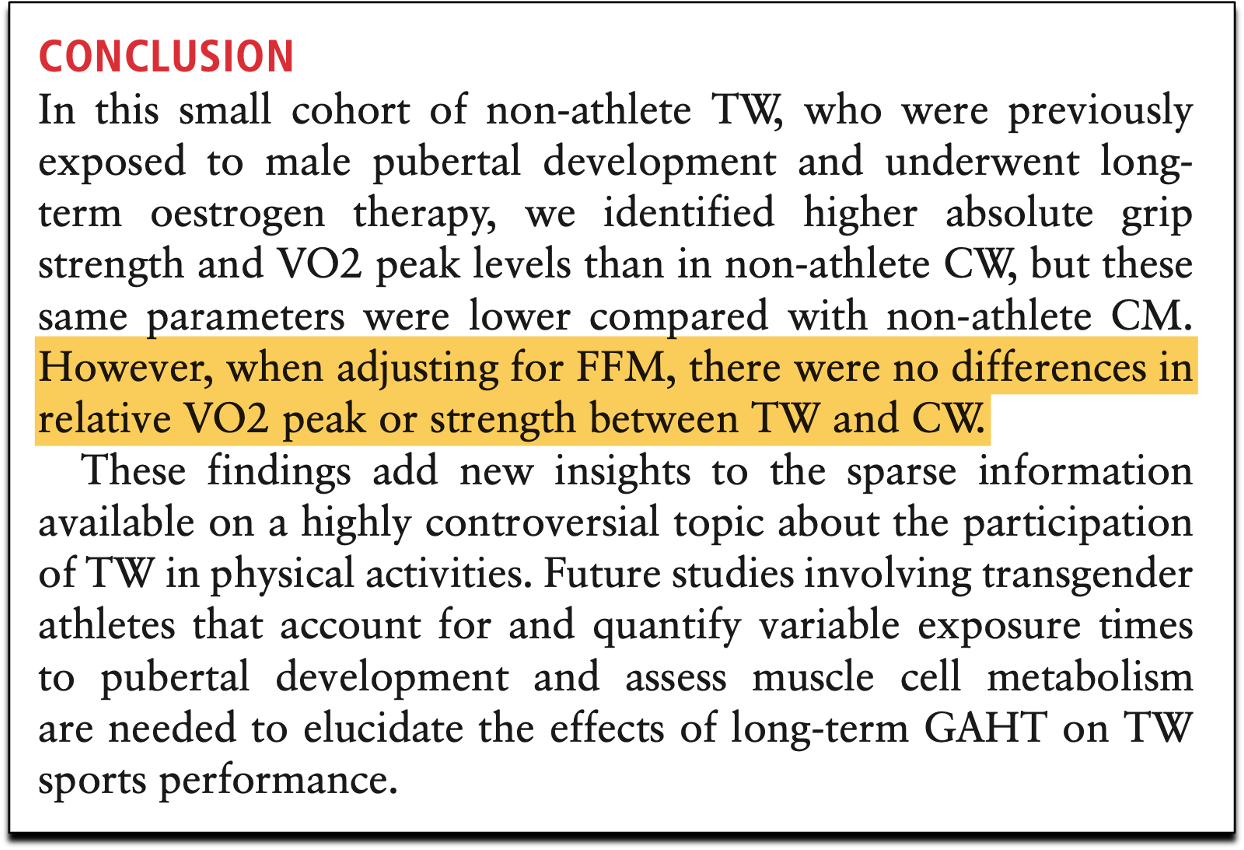
These normalized results are scientifically interesting, but they do not demonstrate that the underlying differences in physical capacity have disappeared. The transwomen still possessed greater body height, body mass, lean body mass, absolute strength, and aerobic capacity. Instead, the statistical adjustment answers a different question: how much strength or aerobic capacity does each group possess relative to a given amount of lean body mass? That may be useful for understanding physiology, but athletes do not compete after their performance has been divided by their lean body mass. In most sports, it is the absolute ability to run faster, lift more, jump higher, or produce more power that determines the outcome.
There is another important limitation. This was a cross-sectional comparison conducted after hormonal intervention; the researchers did not measure these individuals before treatment. We therefore do not know whether they were unusually strong, average, or unusually weak males before beginning testosterone suppression, nor how much their individual physical capacities actually changed. Comparing transwomen with females at one point in time answers a different question from following the same individuals through years of treatment.
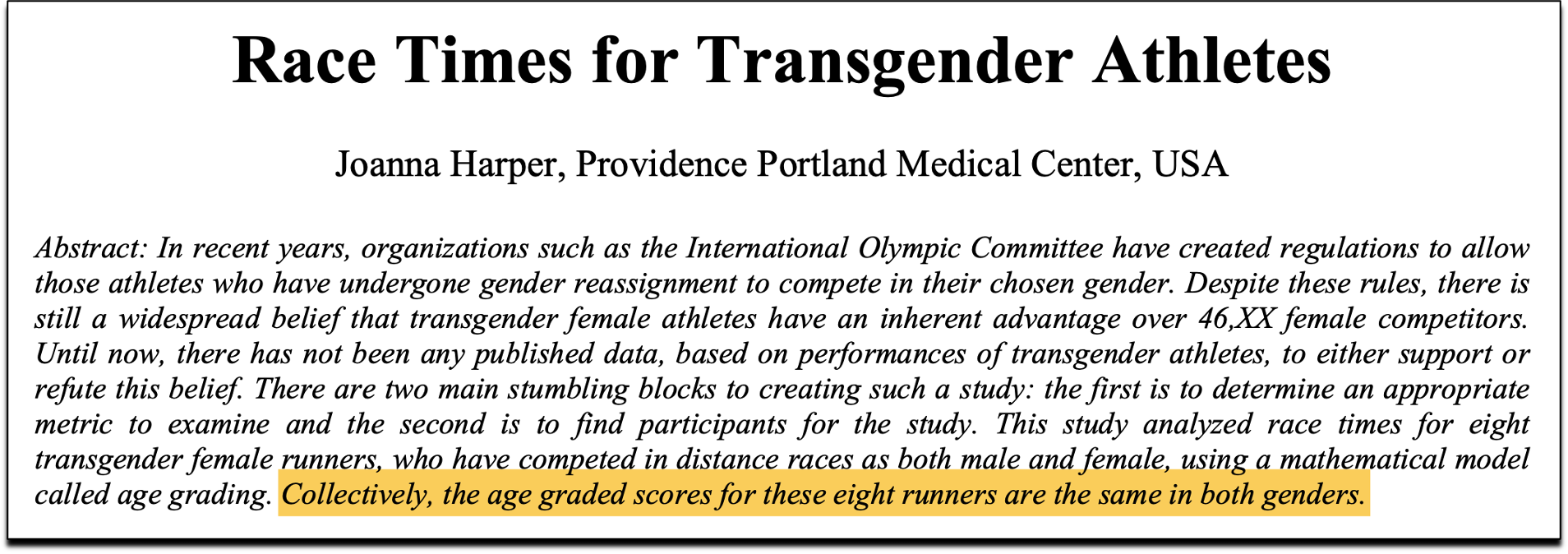
Consider also the influential 2015 study by Joanna Harper examining running performance in eight transwomen distance runners before and after hormonal intervention (16). Despite its very small sample, the paper has played a prominent role in discussions of transgender participation in women’s sports. The study relied on self-reported race times and found that seven of the eight runners became slower following treatment, while one actually improved. When the performances were adjusted using age- and sex-based running standards, Harper concluded that the runners competed at approximately the same relative level within the female category after transition as they had within the male category before transition.
Now compare those eight self-reported cases with the study by Roberts and colleagues, which examined standardized physical fitness testing in 46 transwomen serving in the U.S. Air Force (29). Before beginning hormonal intervention, the transwomen completed the 1.5-mile run approximately 21 percent faster than females. After two years of feminizing hormonal treatment, they were slower than they had been before treatment, but they still ran approximately 12 percent faster than comparable females.
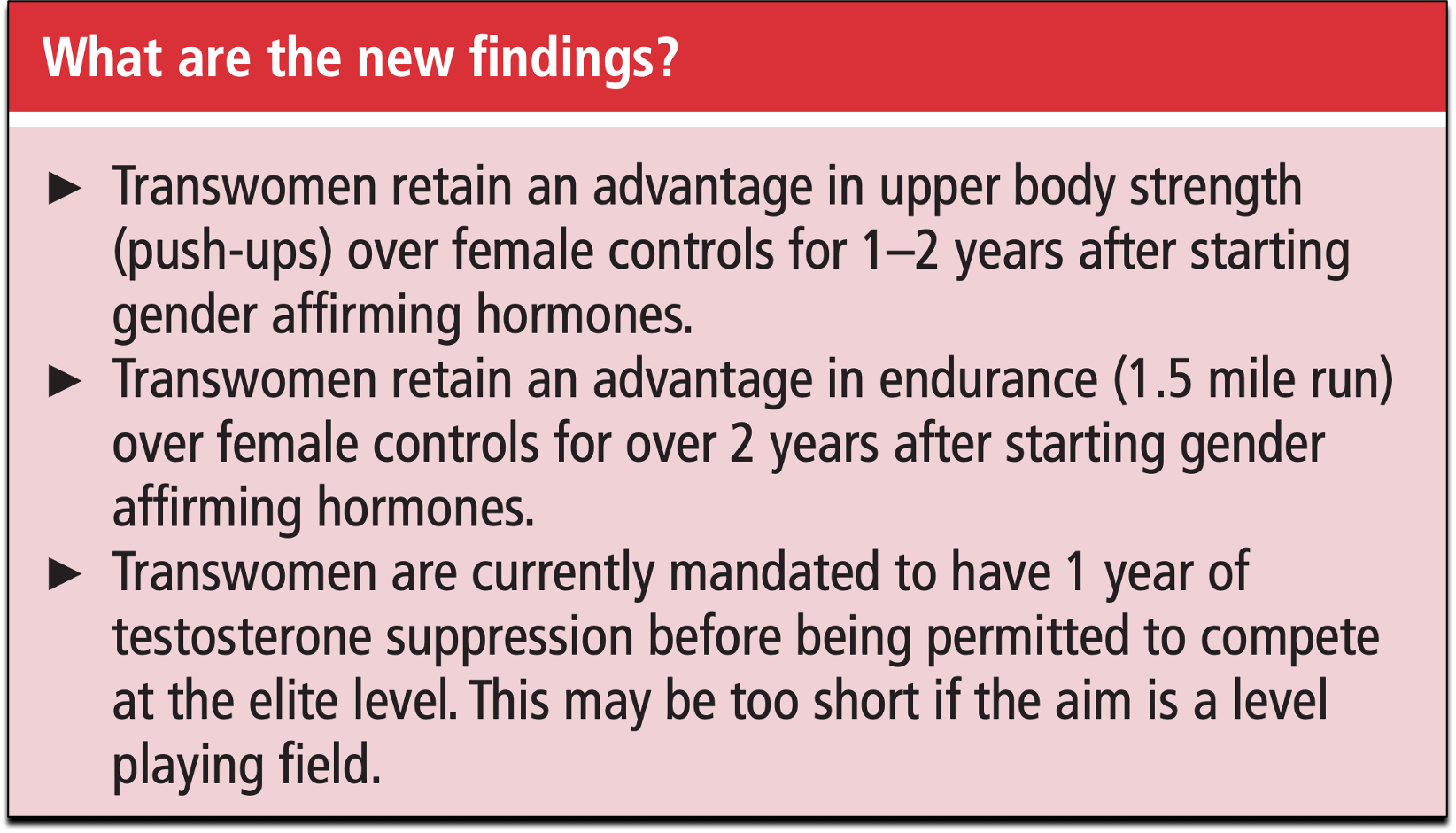
A similar study by Chiccarelli and colleagues (12) also examined U.S. Air Force fitness-test data in transwomen, but followed performance over a longer period of hormonal intervention and used different statistical methods. At baseline, the transwomen completed the 1.5-mile run approximately 18 percent faster than females. That difference progressively narrowed to approximately 9 percent after one year, 5 percent after years two and three, and just 0.2 percent after four years of hormonal intervention.
An important detail, however, is how dramatically the sample size declined over time. The analysis included 223 transwomen at baseline, 96 after one year, 61 after two years, 40 after three years, and only 15 after four years. Thus, the finding that the running-performance difference had narrowed to just 0.2 percent after four years, the result that most strongly suggests convergence with female performance, was based on fewer than 7 percent of the transwomen represented at baseline. This does not mean that the four-year result should be dismissed, but it does warrant considerable caution in determining how broadly that result can be generalized. We also cannot simply assume that the 15 transwomen remaining at year four were representative of the 223 included at baseline.
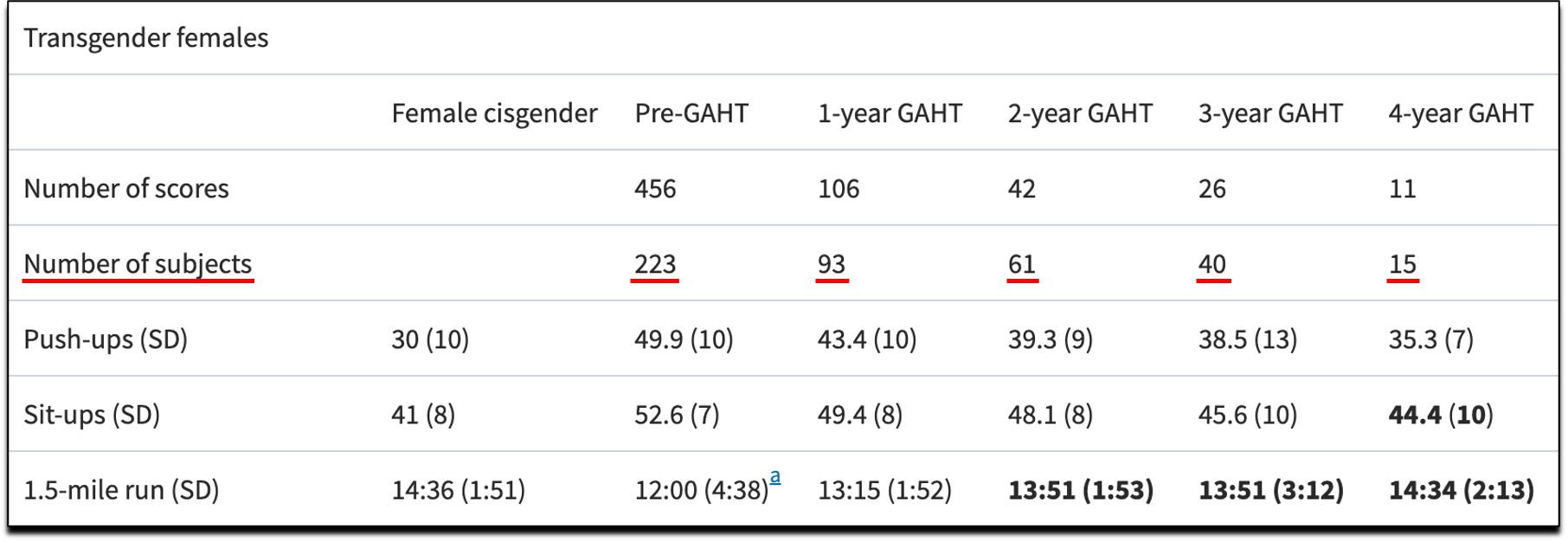
The findings from Harper, Roberts, and Chiccarelli are informative precisely because they show why the evidence cannot be reduced to a simple claim that hormonal intervention either “works” or “doesn’t work.” All provide evidence that hormonal intervention can reduce running performance. Roberts and Chiccarelli found differences remaining through the first several years of treatment, while the Chiccarelli analysis suggests that the difference may eventually become quite small. But the near-zero difference after four years was based on only 15 of the 223 transwomen represented at baseline, creating considerable uncertainty about how broadly that result can be generalized. A finding that the average difference in one particular running test approaches zero does not establish that all of the physiological and performance differences between males and females have disappeared. Taken together, these studies provide good evidence that hormonal intervention reduces running performance; they provide much less certain evidence about when, or whether, the male advantage in running performance is completely eliminated.
For one more example, consider the studies by Wiik et al. (31) and Lundberg et al. (24), which followed a group of 11 transwomen from before the initiation of hormonal intervention through one year and then five years of treatment. The researchers measured changes in leg muscle size and strength, among other physiological characteristics. After the first year, muscle size had decreased by approximately 4–5 percent, yet muscle strength had not significantly decreased. After five years, muscle size had declined somewhat further, for an overall reduction of approximately 7 percent, while muscle strength remained the same.
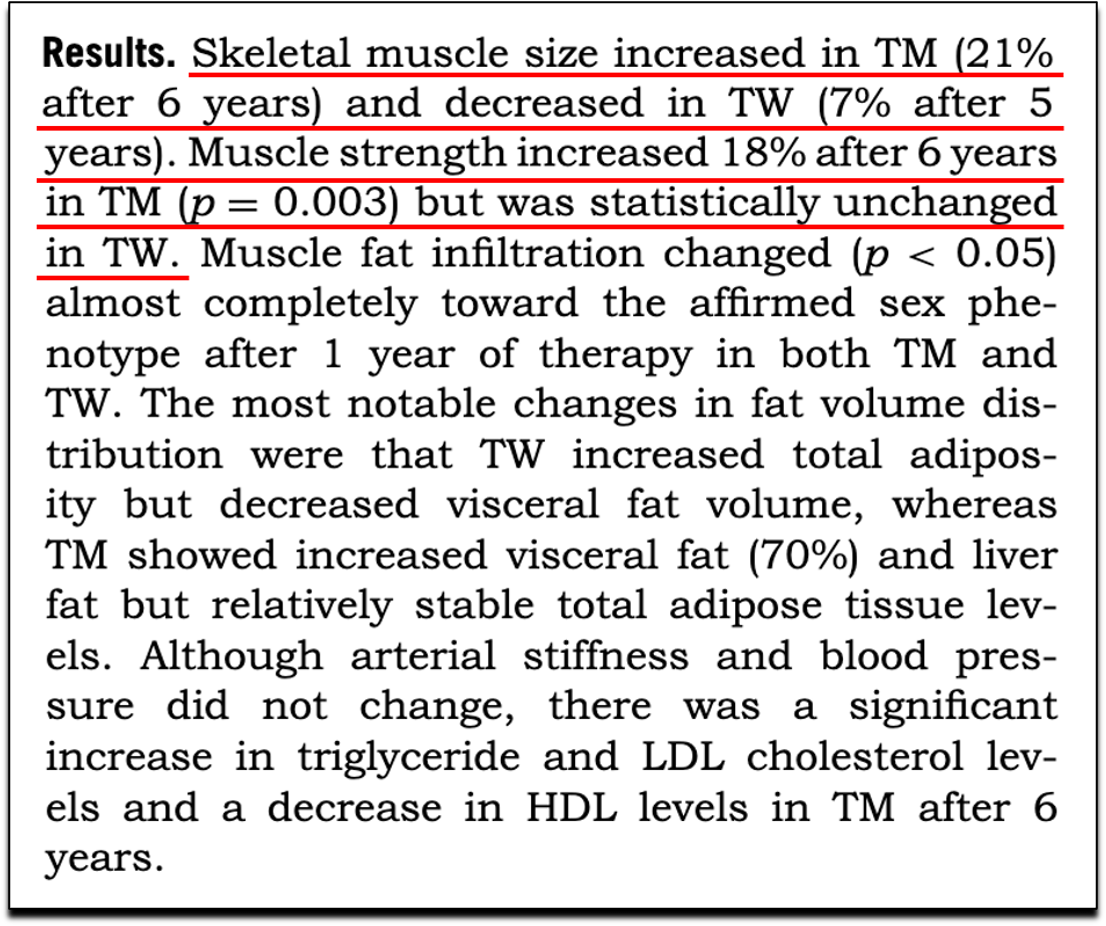
This distinction matters. If we looked only at the reduction in muscle size, we might reasonably expect that strength, and potentially athletic performance, had declined by a similar amount. But that is not what happened. A measurable change in one physiological characteristic did not produce an equivalent change in another closely related characteristic. A physiological change is evidence of a physiological change; it is not automatically evidence of an equivalent change in athletic performance. Evidence that hormonal intervention changes one physiological variable is not evidence that every performance-related consequence of male development has changed along with it.
Reduction Is Not Erasure
Overall, the research directly examining the effects of hormonal interventions on physical fitness and sports performance in transwomen remains limited. The Mendes Sieczkowska meta-analysis included only 15 studies, and although other relevant studies were not included, the overall evidence base is still fairly small. Moreover, these studies involve relatively small numbers of transwomen, examine different populations and durations of hormonal intervention, measure only a limited selection of the many physiological and performance characteristics that differ between males and females. Some characteristics decline substantially, others only modestly, and still others change very little if at all, with considerable variation from one study to the next. The evidence clearly shows that hormonal intervention changes some characteristics related to physical performance. What it does not clearly establish is that the collection of sex-based characteristics responsible for male athletic advantage is thereby erased.
These relatively few studies, however, do not exist in a scientific vacuum. They must be interpreted within the much larger body of research establishing the magnitude, consistency, and physiological basis of sex differences in physical performance. And the magnitude of those differences is not trivial. Decades of research and innumerable papers involving hundreds of thousands of males and females have documented substantial male advantages across numerous measures of athletic performance. Depending on the event and level of competition, these differences are approximately 10–13 percent in competitive running, 15–20 percent in jumping events, and 30–60 percent or more in competitive weightlifting (17,19,22). And this evidence continues to accumulate.
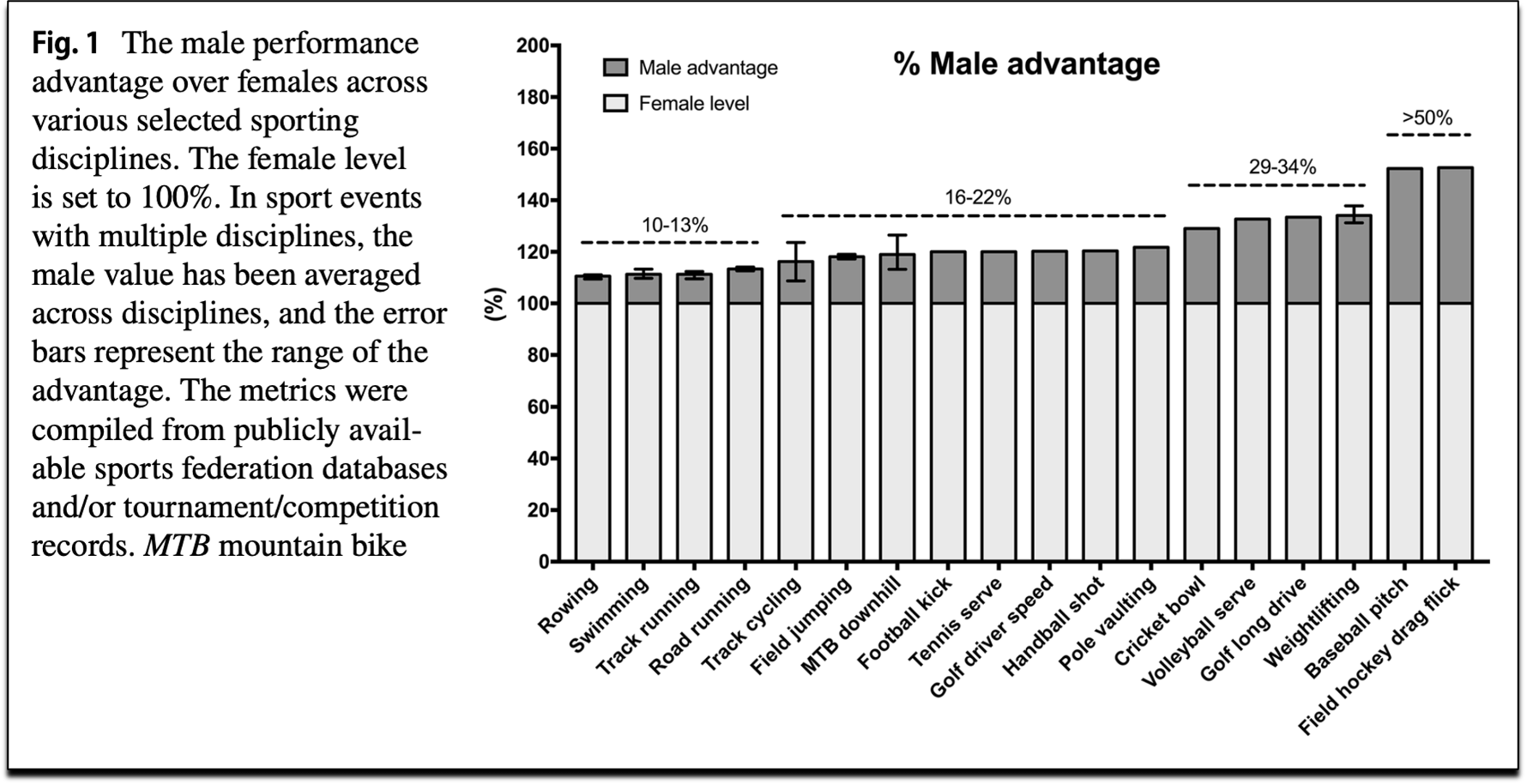
Within just the past three years, ten studies using data from thousands of children have reported sex-based differences in competitive sports performance among prepubertal-age children. These include male performance advantages of approximately 3–8 percent in running (3,4,6,8,10,13,21), 5–10 percent in jumping (3,7,9), and 6–50 percent in throwing events (7,9,23). These findings are particularly relevant because they demonstrate that sex differences in physical performance do not suddenly appear with male puberty, even though puberty substantially magnifies many of those differences (22). The scale of some of these studies is also noteworthy: individual studies of childhood sports performance include thousands of participants, exceeding the combined sample sizes of all of the research examining physical performance in transwomen.
In other words, the biological phenomenon that hormonal intervention is hypothesized to erase cannot be reduced simply to elevated testosterone concentrations following male puberty. It is a broad, multifactorial pattern of sex differences in anatomy, physiology, and physical performance—some detectable even before puberty and many dramatically magnified by male puberty.
And that brings me back to my exercise physiology lab. If, through random chance or selective sampling, only the six students whose average EMG amplitude decreased between the medium and heavy weights were used for analysis, I could present real data showing that greater force production was accompanied by less neuromuscular activation. If my class consisted of only a handful of students, one unusual result might even be enough to make the expected relationship statistically disappear. But neither observation would justify concluding that the well-established relationship between neuromuscular activation and force production had been overturned. The individual observations are real. They deserve to be examined and explained. They simply have to be interpreted within the larger body of evidence.
The same standard should apply when evaluating claims about testosterone suppression and male athletic advantage. A transwoman who does not win a race is a real observation. So is a transwoman who does win. Neither result, by itself, establishes whether a population-level athletic advantage exists. An advantage changes the probability of an outcome; it does not guarantee the outcome for every individual. Likewise, a single physiological measurement in one study cannot tell us whether a complex athletic advantage has disappeared. These observations should not be ignored, but neither should they be asked to establish more than they actually demonstrate. A small, diverse body of research cannot simply negate decades of established knowledge about the many ways in which male and female bodies differ in characteristics relevant to athletic performance.
My students’ EMG data teach a simple lesson that extends far beyond an undergraduate laboratory: science requires us to consider all of the evidence, not merely the observations that appear most interesting in isolation. Testosterone suppression unquestionably changes the male body and can reduce some aspects of physical performance. But “reduced” is not synonymous with “erased,” just as “not statistically different” is not synonymous with “equivalent.” If the scientific claim is that male athletic advantage has been erased, then the evidence must demonstrate that proposition. A finding that an advantage has been reduced is evidence. Turning that finding into the conclusion that the advantage has been erased requires considerably more.
RLS Readers: Save 50% on SEGM’s 2026 Conference
The Society for Evidence-Based Gender Medicine (SEGM) is bringing leading researchers, clinicians, patients, parents, and legal experts to Washington, DC, November 5–7, for its 2026 conference, “Rethinking Youth Gender Medicine: Charting a Path Forward.”
Over three days, speakers will examine what the evidence on youth gender medicine actually shows, where important uncertainties remain, and what ethical and responsible care should look like going forward.
SEGM has generously extended a special 50% discount to Reality’s Last Stand readers on both in-person and livestream tickets! Use promo code RLS-SAVE50% when registering.
This special rate may not last forever, so register soon if you plan to attend.

If you enjoyed this free article, please consider upgrading to a paid subscription or making a recurring or one-time donation below to show your support. Reality’s Last Stand is a reader-supported publication, and your help is greatly appreciated.
If you enjoyed this article, you may also like…


This is a very thoughtful and interesting article. As a biological psychologist, I, too, have conducted similar electrophysiological laboratory exercises with my students. So, I appreciate the importance of your work and the data you’ve collected. Facts are always better than unsubstantiated opinion.
I think the key point that is often overlooked in this controversy is that a woman is NOT a debilitated man. As a scientist and former competitive athlete, I find the underlying assumption against which you are arguing both offensive and unhinged from reality. I also find it patently insulting to women.
Thank you for your excellent essay.
Sincerely,
Frederick
This is a cogent and dispassionate analysis of an area of dispute where wilful distortion has defied collective common sense.
Some people seen to truly believe that after changing his name to Angel-Star Froufrou & taking the first oestrogen tablet, any male athlete rapidly becomes 6 inches shorter, with a smaller heart and lungs, and shoulder width visibly reduced. Take the Magic Oestrogen and win the prize of teeny Lady Bones!
Nor is this delusion risible but ultimately harmless, since people who refuse the affirm the pretence are excoriated and threatened...sigh.